Some say 'malthouse', others - 'granary'. Bread made with wholemeal flour mixed with malted grains, basically, the flour 'with bits'. And the loaf is 'with bits'; tasty and healthy as any you might make at home.
What is malthouse flour?
Malthouse flour aka granary - and I'm not entirely sure whether there is ANY difference between the two terms - is bread flour with bits. It's mainly wheat with some rye flour added plus the bits: malted grain or grain flakes.
It's fantastically full of fibre but not so stodgy and dense so as to make you feel like you're eating a punishment sandwich.
How to make malthouse bread?
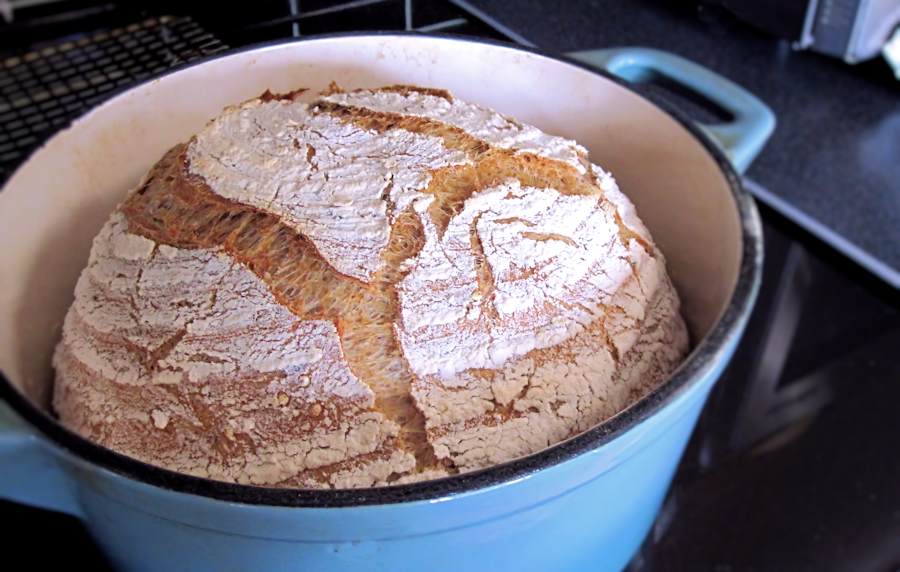
Malthouse bread is dead easy to make. It's the classic example of a product made with just a couple of simple ingredients, where the outcome is so much better than you might expect. Be precise about quantities, let the dough rise impressively and then it's your choice whether you shape it into a round boule and bake it in a Dutch oven, sourdough-style, or make an oblong shape and use a loaf tin.
Both work exceedingly well - the latter method is explained step by step in the malthouse sandwich loaf recipe. The one featured here was baked in a cast iron Le Creuset casserole dish about 20cm in diameter. I shape it and place it in a proving basket seam side up - that way there is no need to slash the top while you're transferring it into a red-hot dish as the dough will crack naturally along the seam lines.
Is malthouse the same as granary?
Both terms refer to flour with added malted wheat flakes (which, as above, I call 'bits' for simplicity). Malthouse is a generic term as produced by various British millers, while 'Granary' is a registered trademark of Hovis.
Tasty?
It is an incredibly tasty bread and it keeps very well; it toasts like a dream, too. I can safely say it's one of the best ever, simple yeasted breads.
Acknowledgement
I use Doves Farm Malthouse Bread flour but any malthouse - or granary if bought from Hovis - flour will be suitable. The recipe comes from the Shipton Mill website.