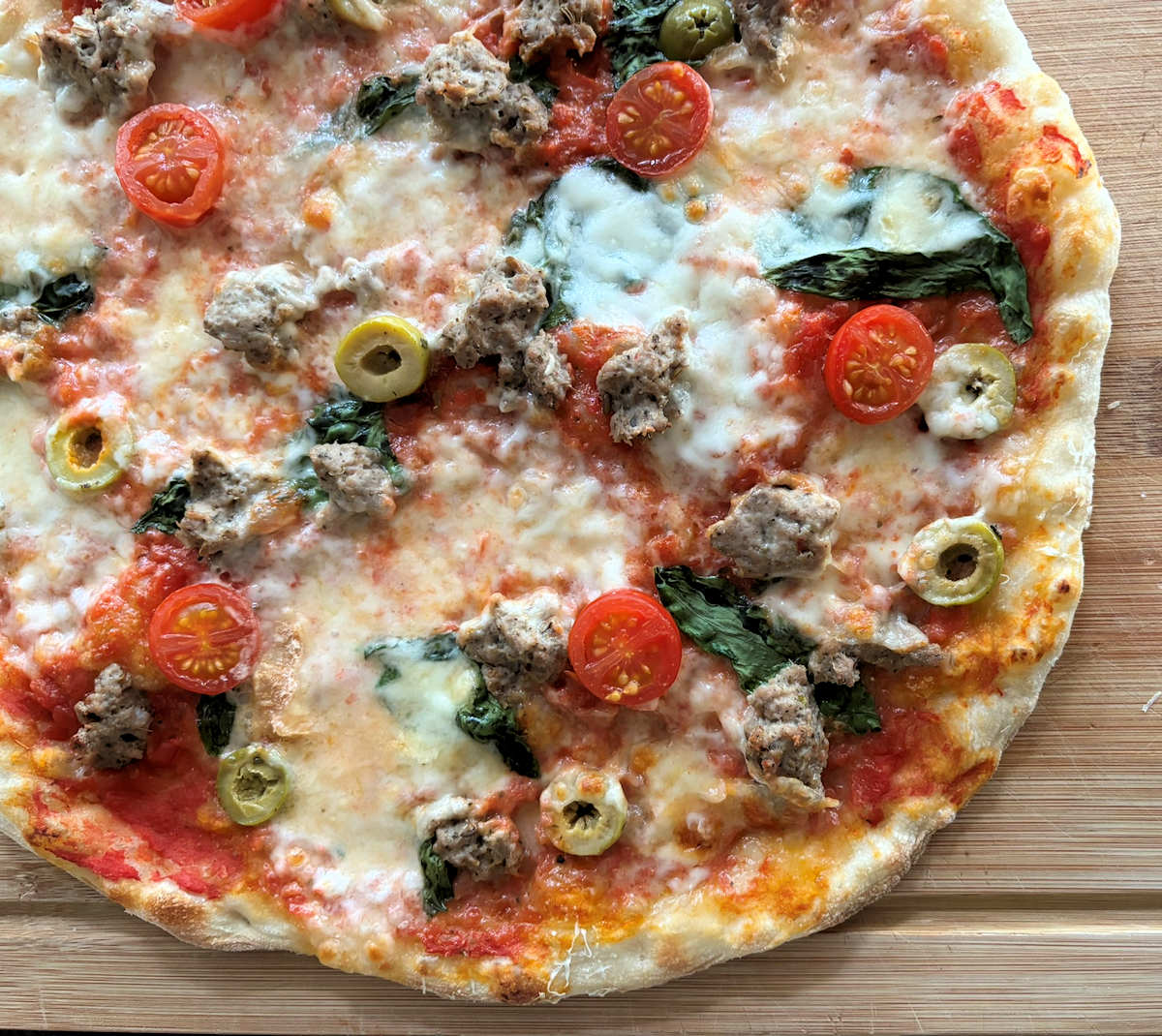
Italian pork sausage, salsiccia fresca, is surprisingly easy to make at home: no casings or special equipment needed. Mine is packed with toasted fennel, garlic and herbs, ready to scatter over pizza or fry for a breakfast bap.
Sausages, sausages!
Sausages are probably at least four thousand years old, with records from Mesopotamia noting dishes of meat bits and scraps stuffed into animal intestines.
Sausages are eaten all over the world, and any animal protein can be stuffed into a casing including kangaroo, goat or shellfish. And it’s not surprising: it’s a brilliantly frugal way of using up the whole slaughtered animal, with next to no waste. Incidentally, it’s amazing how people who balk at offal will happily snarf even dubious quality bangers.
Sausages come in all hues and shades, and the main two categories are the raw ones that need to be cooked for consumption, and the processed ones, be it smoked, cured, dried or all of the above. The latter can be sliced and eaten as they were and include salami, saucisse sèche, chorizo, kabanos and many more. The ones that must be cooked might have offal or blood added to them, along the noble principle of ‘waste not, want not’.
What is Italian sausage?
It sounds like a hugely generic term and when I first heard it, from my American son-in-law, I was convinced it was a purely US invention for a pizza topping. But it is actually a proper culinary term, an English language name for a type of popular raw sausage called in Italian salsiccia fresca. Some sources shortcut it to ‘salsiccia’, but as the word means ‘sausage’ in general, it might be confusing.
It perhaps sounds exotic but it’s in fact very close to the classic English sausage. Both are raw, not cured, dried or smoked and meant to be fried, boiled or grilled before serving. The difference is that the Italian is about 99% meat, without the common in England additions of rusk, cereal and other fillers.
In Italy it is usually sold as forcemeat, either in intestine or a manufactured collagen casing, just like any other sausage. But if you skip the stuffing, it can be very easily made at home.
How to make Italian sausage
There are very many regional flavours of salsiccia fresca in Italy. The recipe below is probably the most popular one in the Italian American cookery, as confirmed by Kenji Lopez-Alt, whose recipe I consulted, as well as my primary taster and a pizza aficionado, the American son-in-law.
The only minorly fiddly part is toasting the fennel seeds then crushing them in a pestle and mortar but it pays off tenfold in taste.
Use the best quality pork you can get, which doesn’t mean the leanest though. Sausages should be fatty – so the absolutely best mix for it would be pork shoulder plus guanciale, pancetta or streaky bacon (unsmoked), minced at home. But I know that’s unrealistic for a lot of people so instead buy free range minced pork with the highest fat content they have in the (preferably butcher’s) shop.
And then put all the ingredients in a large bowl, wash your hands and get to it, kneading and mixing for a good while, until the mix is completely homogenous and feels tacky to touch.
It can also be mixed in a standing mixer with a paddle attachment, but do not use a food processor with a blade for it or you’ll blitz it into paste.
The sausage will keep for about a week in the fridge, in an airtight container.
How to use Italian sausage?
As explained above, it’s wonderful on a pizza. Even a shop-bought pizza base or ready-made dough will taste lively and homemade with the topping of the salsiccia.
Be sparing with it though, overloading is bad as a principle as well as it might stop the sausage from cooking properly through.
And it’s a great breakfast bap or roll filler. Scoop a sizeable chunk or more of the prepared sausage, and flatten it with a spatula in a hot pan.
Cook until well scorched on both sides, slap into a bread of your choice and enjoy.
More Italian pork recipes
Tender Italian-style meatballs gently simmered in a rich tomato sauce: a one-pan meatball recipe with Parmesan and herbs, classic comfort food perfect for serving with pasta or rice.
Neapolitan pork braciole in tomato sauce, braciole napoletane al sugo, authentic and classic Italian Sunday lunch dish of stuffed pork roulades braised in tomato sauce.
Porchetta, classic Italian pork roast, prepared with the easiest cut to handle: pork collar, also sold as neck or shoulder. Served usually cold in bread rolls, it is also gorgeous as a dinner roast.
More sausage recipes
Sausage, pear and root vegetable tray bake with chestnut mushrooms and rosemary is an easy one pan dish that hits the comfort spot.
Mini party rolls, filled with chipolata sausages or ham and cheese filling. They are easy to prepare and invariably the biggest hit with party people.
Sausage rolls in puff pastry - these take minutes to prepare and taste better than any shop-bought. Use best quality sausages and good all-butter puff pastry.