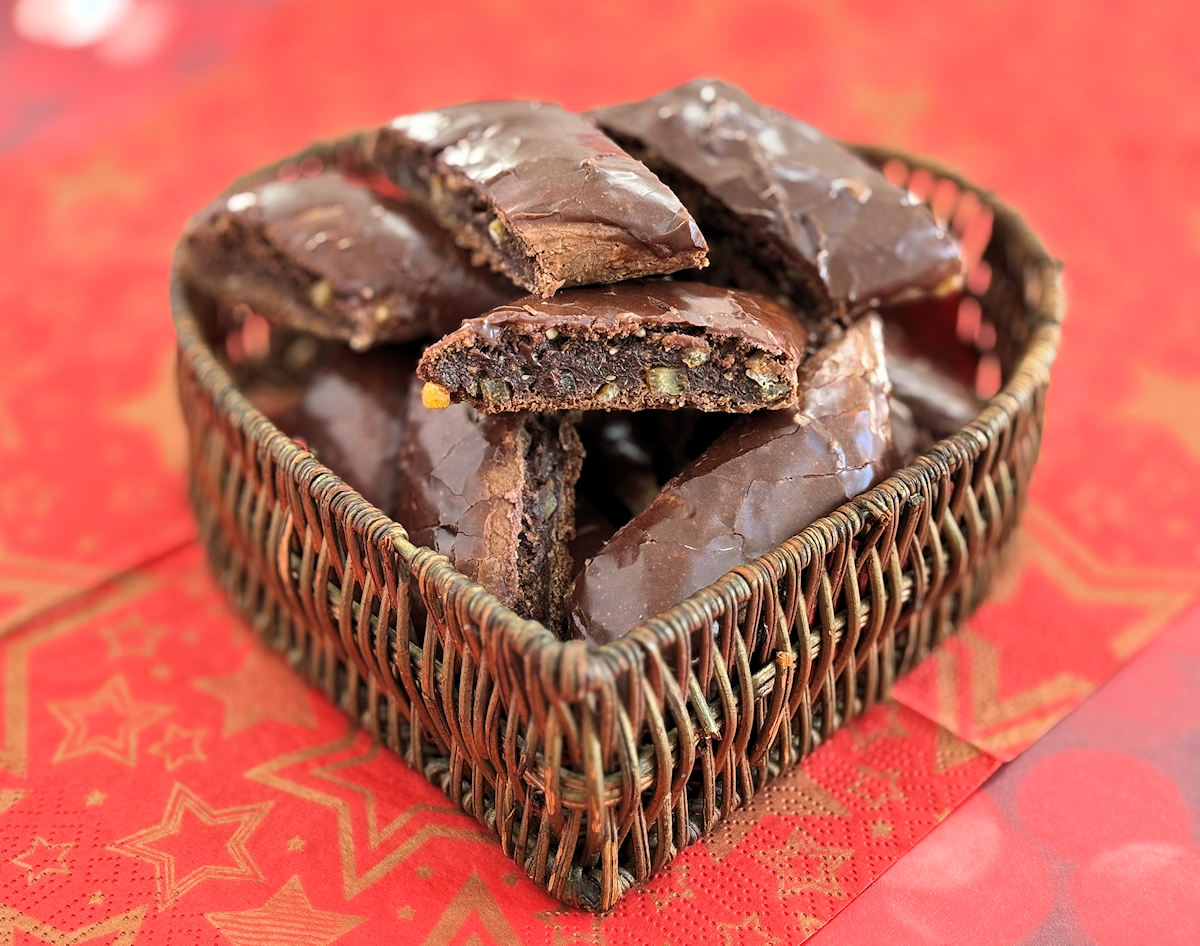
Little bites, plenty of spice! These magenbrot biscuits combine hazelnuts, honey and candied peel with a cocoa glaze. Fill a festive biscuit tin for gifting—or keep the lot for yourself.
What is magenbrot?
Magenbrot is a traditional spiced, glazed gingerbread sweet popular in Switzerland and southern Germany. In Switzerland they are also known as Alpenkräuter-Brot which means alpine herb bread, or pains à l'estomac (stomach bread, which is also the literal meaning of the German word ‘Magenbrot).
Why stomach? The mix of spices and sugar used to be considered beneficial for digestion, so similarly to the English digestive biscuits, magenbrot were thought to be good for you. Tempora mutantur!
In Switzerland magenbrot are sold at fairs, wine festivals and autumnal markets. In Germany they are one type amongst assorted lebkuchen, Christmas gingerbreads present at Weihnachtsmärkte.
Grinding nuts
A key ingredient in the dough, ground hazelnuts are not easily available in British supermarkets, though it is possible to buy them from various whole foods suppliers.
But if you have a spice and nut grinder, an appropriate food processor attachment or are able to repurpose a coffee grinder, you can grind them yourself. The best for that is actually an old fashioned, manual nut and almond grinder because the electric appliances, especially food processors, tend to deliver partly chunks, partly paste if you’re not careful and shake the contents frequently.
You can also use shop bought ground almonds, though I think hazelnuts go better with the spices in the dough.
How to make the magenbrot dough
Very easy, just like most gingerbread biscuits. Some recipes include the cocoa powder only in the glaze but I like the chocolatey recipe from Einfach Malene (Simply Malene).
Dry ingredients, that is the flour and the ground nuts, spices, raising agents plus chopped mixed peel should all go into a large bowl.
The honey and sugar need to be warmed gently with a little water, just so the sugar dissolves: on no account boil the mixture.
With the milk added in, it can now be stirred into the dry ingredients. The dough will be quite firm and sticky, so either knead it patiently with your hands until smooth, or use a standing mixer with a dough hook, if you own one.
Once it’s smooth and cohesive, wrap the dough in cling film and let it rest in the fridge, any time from at least three hours and up to a couple of days. You can also divide the dough in halves and freeze a portion for later use.
Baking the dough sticks
When ready to bake, prepare large baking trays lined with parchment and brace yourself for sneering and ridicule from your family or whoever sees you in action.
There’s no way around it: chunks of the dough rolled into sausages, deep brown and speckled with candied peel do not look appetising! But tell them all to sod off and trust you, and you trust the recipe.
Seriously now: you can roll the logs thinner or thicker, depending on how large you want the biscuits. It’s also easier to roll the dough wrapped in cling film, otherwise it might break and crumble.
Arrange the sausages on the trays, spacing them apart reasonably, and bake for about ten to fifteen minutes, depending on their thickness. They are ready when still soft, but the very tips take on darker, baked appearance.
Glazing, cutting and storing
While magenbrot are baking, mix the glaze. It’s a simple affair of icing sugar with cocoa, whisked with the juice of half a lemon, plus as much hot water as needed to make the consistency runny and brushable.
When they are out of the oven, glaze them straight away as the glaze needs to soak in. Be generous: if there is enough icing, you can go twice round.
And as soon as they are glazed, cut them into biscuits with a sharp knife. Traditional German cut is on the diagonal, a diamond shape if the dough sticks were skinny. But straight slices or square cushions are fine too, because whatever the shape, they will be as delicious.
The glaze will set quickly and soon after the magenbrot can be packed into pretty biscuit tins or jars. They will keep well for weeks so are especially good for gifting. But the batch left for home consumption – why, the ‘weeks’ is completely academic there because they will vanish in no time at all.
More gingerbread recipes
Dutch gingerbread biscuits, speculaasbrokken, thick and chunky. They are the easiest Christmas cookies, baked in a large slab decorated with almonds.
Gingerbread biscotti spiced with Christmas flavour, crunchy and dunkable, with mixed nuts and cinnamon sugar coating. Honey and spice and a festive spirit twice cooked!
Christmas gingerbread cake with orange marmalade filling and maple syrup icing. It's sticky, spicy with dry, fresh and preserved ginger, the perfect festive cake and it’s also marvellously easy to bake.
More German Christmas sweets recipes
Stollen bites, mini treat versions of the German fruited Christmas log. I make them with pistachio marzipan and apple marmalade and they are completely irresistible.
Zimtsterne are German cinnamon and almond star-shaped cookies baked and gifted during Advent and Christmas. Tiny, dainty and naturally gluten-free, they are like an edible sweet snowflake!
Apple strudel recipe with homemade pastry. This is a slightly cheated apple strudel recipe, as the pastry is not stretched very thin, but it works better in a strudel than filo or puff pastry.