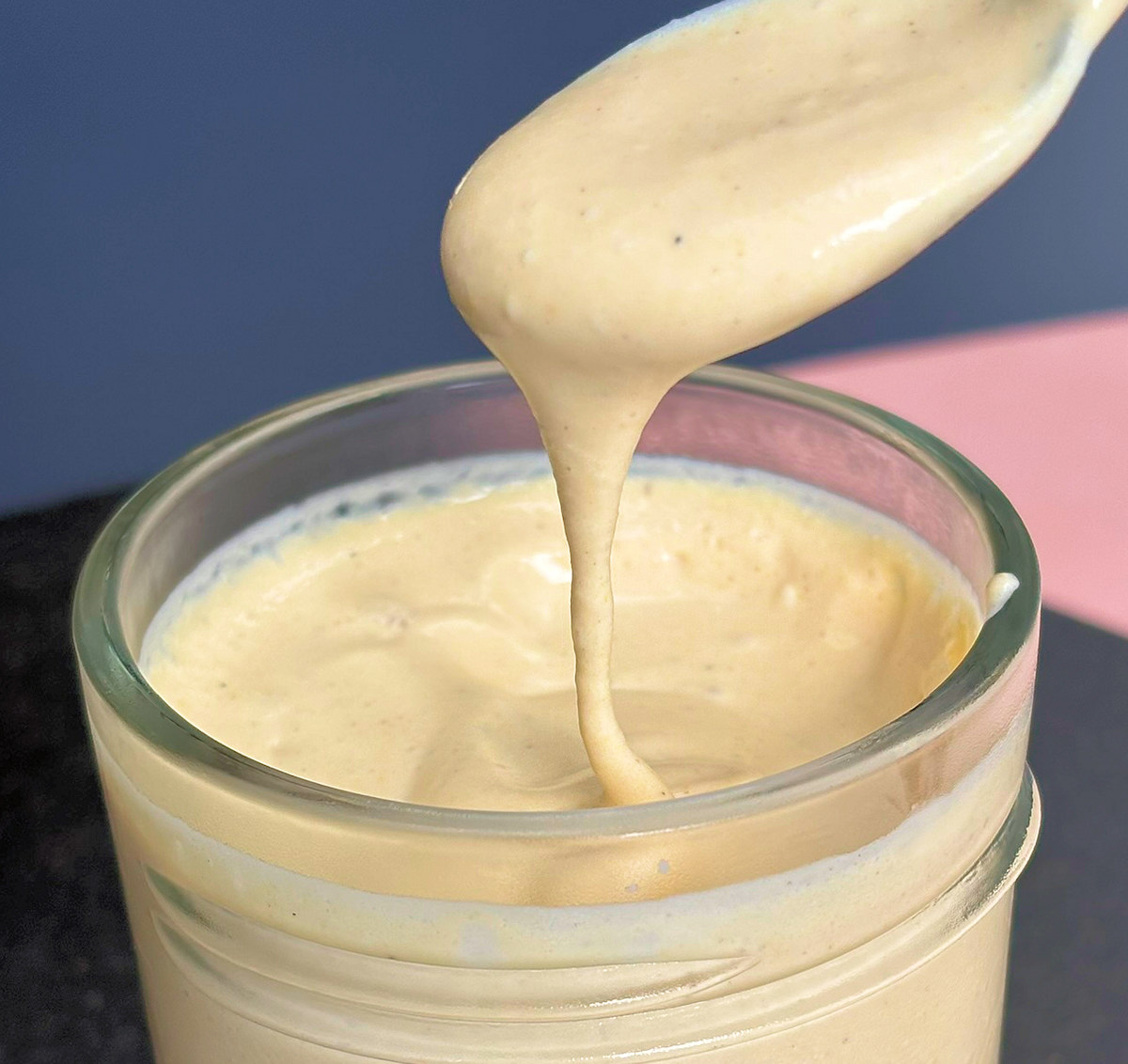
When mayonnaise just won’t cut it: salad cream, the classic British condiment, is tangy, sharp, runny and very smooth.
What is salad cream?
What do you mean, what is salad cream? If you grew up in Britain (unless you’re Gen Z), you will have memories of salads served for tea that had lettuce, boiled eggs and cooked beetroot in it, all swimming in white sauce that was possibly its main redeeming feature.
Salad cream is as British as fish and chips, and it goes back to at least 19th century’s Mrs Beeton’s cookbooks. But it took an American company, Heinz (of course), to popularise and develop it commercially in 1914. It took off and soared over the British Isles, dribbling into salads and sandwiches, especially popular during the two world wars when ‘luxury’ dressings like mayonnaise or ketchup were in short supply.
But in the 1960s the public started turning their noses up at salad cream, with bland mayo winning the grounds and foreign competition from tzatziki and hot sauces helping knock it to the ground. In the 90s Heinz actually considered scrapping the production. Thankfully the public protested all the way to the House of Commons and the sauce was saved.
Salad cream vs mayonnaise
Mayonnaise is a simple affair: raw eggs emulsified with oil. Whether only egg yolks are used or whole eggs, and what kind and how much of mustard goes in is a nuance. Mayo is thick and creamy, and very, very rich though not so much in flavour. It is quite tricky to make at home unless you use my genius 3 minute recipe (ha!).
Salad cream on the other hand is classically made with cooked egg yolks, mustard, vinegar and cream. The texture should be pourable, the flavour sharply acidic and slightly sweet, and it is a complete doddle to make at home.
Buy or make?
Apart from it being easy, I believe salad cream is one of those foods that benefit immensely from being homemade. Heinz is all very well but it doesn’t actually have real cream in the ingredients, and I had always thought it was missing a je-ne-sais-quoi in its taste, until I tried the homemade version.
As with anything you make yourself, you can adjust the taste, make it sweeter or sharper, and make sure the eggs and the cream are great quality. Homemade really wins in this instance.
How to make salad cream in a blender
With a blender or a food processor, one of the smaller appliances preferably because the output amount is not huge, it’s a thirty second job.
Hard-boiled egg yolks, mustard, lemon juice, sugar, vinegar and cream go in, and after a brief whiz they thicken beautifully into viscous sauce.
I thin it out with buttermilk but you can use neutral oil for a richer flavour, or even water if you wish to keep the calorie content down. Taste the cream, season with salt and pepper and add a pinch of MSG if you have it.
How to make salad cream by hand
A blender is by no means essential. Place the egg yolks in a bowl, add in everything but the cream and buttermilk, and mash it with a spoon into a smooth paste. Now pour the cream in gradually, keeping the texture smooth and whisking energetically so the sauce thickens. Finish with buttermilk to the right consistency, and adjust the seasoning. Job done.
It will keep in the fridge for a good week or 10 days.
Salad cream’s Polish cousin
When I first found how salad cream was made, it was a revelation: why, it’s the Polish tartar sauce! That was exactly how my grandmother would go about making tartar sauce to serve with cold meats - notably not fish. Cream whisked into hard-boiled egg yolks mashed with mustard was the sauce base, and into that finely chopped hard-boiled egg whites were stirred in (no waste, you see!), with finely diced cornichons and pickled mushrooms (capers being quite unheard of in Poland in those days).
I used to absolutely adore that tartar sauce and have been known to eat it with a spoon straight from the jar.
Variations
And that Polish connection opens up some interesting variations on the old salad cream. Add the chopped up egg whites with some chopped gherkins and capers for the Anglo-Polish tartar sauce to go with your fish and chips. It will actually work better than the mayonnaise-based sauces being more vinegary and sharper.
Alternatively add some chopped herbs like tarragon and chives, to make it closer to a ranch dressing.
And the third choice is for a Marie Rose style condiment. Skip the sugar from the sauce base and flavour it instead with a couple of tablespoons of sweet chilli sauce, preferably smooth like Linghams. Or else add tomato ketchup and some Worcestershire and/or Tabasco.
More condiment recipes
Homemade sweet, spicy and tangy barbecue sauce with apple cider, honey, soy sauce and cinnamon. Ready in about 30 minutes and keeps for 10 days in the fridge.
Hot honey, the sweet and spicy condiment that is drizzled over pizzas, cottage cheese and roast chicken everywhere, is very easy to make very well and even easier to make on the quick, with a shortcut.
Kewpie-style mayonnaise, the umami bomb of a condiment, which you can make at home in exactly one minute. A stick blender and a tall jar make true magic happen.
More easy sauce recipes
Homemade basic tomato sauce made from scratch and a couple of tins of good quality tomatoes. It is simple and delicious, making it no excuse to use shop-bought sauce on your pizza or pasta.
Classic pesto is made from basil, toasted pine nuts, Parmesan and extra virgin olive oil. Easy to make at home and more versatile than you'd think.
Mushroom sauce, creamy and fragrant, with a few dried wild mushrooms that make all the difference. The sauce for pasta, steak, chicken, meatballs and whatever you fancy.