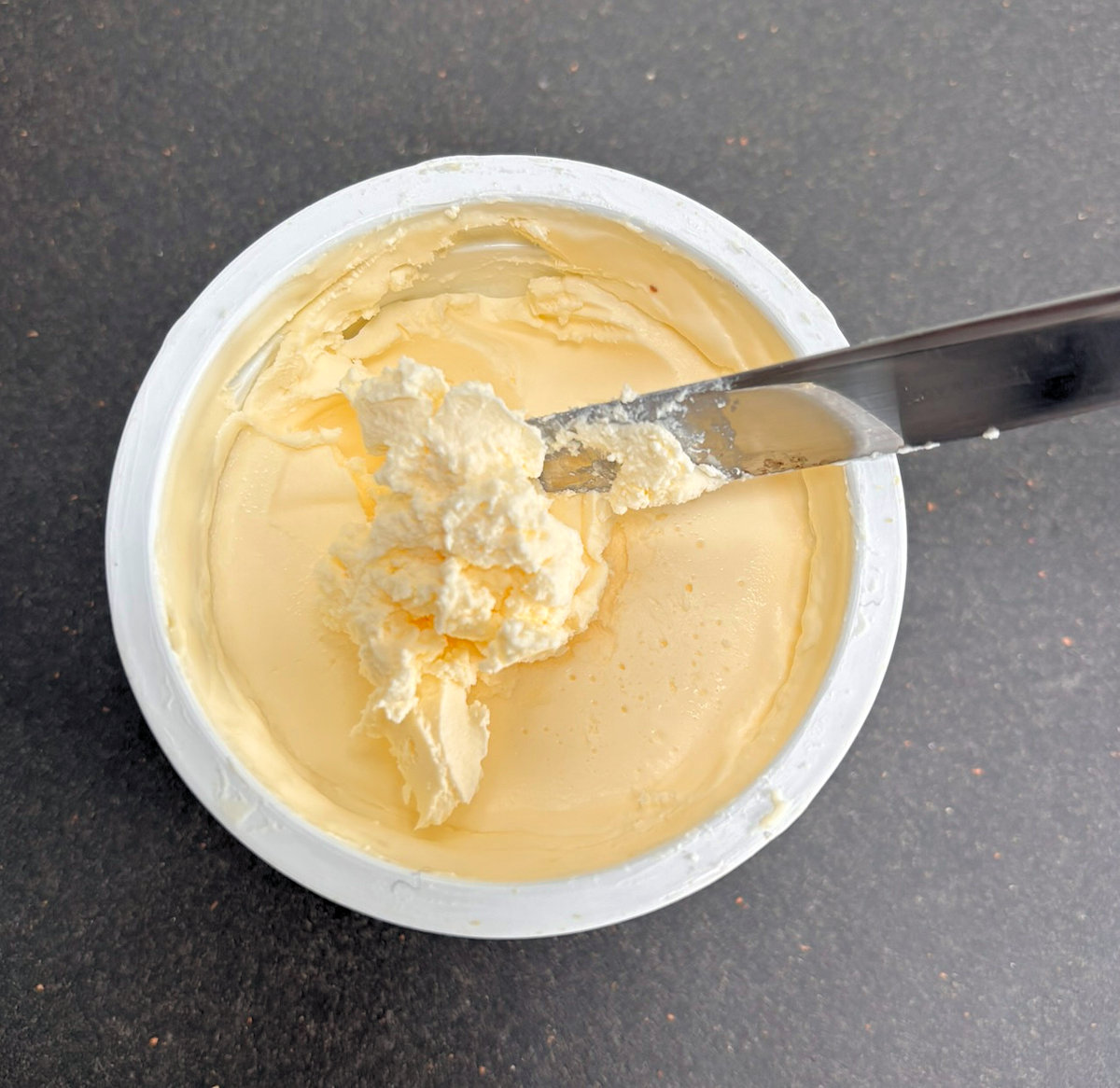
This is such an easy and satisfying product, with many delicious uses! Cultured cream or kefir cream is a cross between soured cream, crème fraiche and butter.
What exactly is kefir cream?
I think a more precise name would be ‘kefired cream’ as the preparation is double cream with only a small addition of kefir. The ensuing fermentation turns the cream into a thick, tangy condiment that makes the most versatile topping.
How to make kefir cream?
All it takes is to stir some raw, live, natural kefir into double cream. The proportion is about 10% kefir of the amount of cream, with a pinch of salt which is optional.
The container – and the simplest way is just to use the cream tub – should be covered with a piece of muslin, gauze or paper towel and left on the kitchen counter to ferment.
How long does it take to ferment?
As with all fermentation processes, the longer, the tangier and more sour the product will be. It all depends on your taste: if you want the cream only thickened and not very sour, three days will probably be enough. If you want it really tangy and fit to cut with a knife (almost), give it seven days or more. The trick is to inspect it each day and check if the thickness and taste are to your liking.
When you’re happy with your cream, transfer it to the fridge where it will thicken a little further as it stands, but not get sourer. It will keep in the fridge for several weeks if you make sure to scoop it with clean utensils. That’s how dairy turns mouldy and/or rancid: with bacteria from other foods.
Cultured vs fermented
‘Cultured’ is a word we see more and more in posh delis and fine dining. But what does it actually mean? It’s not that the product is well-read and knowledgeable in arts, if you excuse a lame joke.
Both ‘cultured’ and ‘fermented’ refer to foods that have undergone some bacterial action and the sugars in them have broken down, turning into acid. But while all cultured foods are always fermented, it’s not the other way round. ‘Culture’ refers to bacterial cultures introduced into food, on purpose. Fermentation can be spontaneous: basically, the food going off which is not a bad thing when it’s controlled.
So sauerkraut, kimchi, sourdough, sour cucumbers, fish sauce and apple cider vinegar are all products of fermentation, courtesy of wild, naturally occurring bacteria, spores and microbes. Yoghurt, kombucha, kefir, cheese and miso need a particular strain of bacteria and/or yeast introduced to the base foodstuff to work its magic.
Second hand culture
Luckily, those grains or strains happily live in the dairy, soy or tea they have transformed so you can multiply the production by adding a small quantity of the fermented product to a fresh base, and the outcome will be none the worse.
You can make a fresh batch of kefir simply by adding a little natural kefir to milk. You can make more yoghurt by adding some to heated up then cooled down milk.
And you can make cultured cream, arguably the most delicious fermented dairy product, by adding some live kefir, yoghurt or cultured buttermilk to double cream and leaving it to sit and ferment, which is what this recipe is all about.
How to use kefir cream?
I adore it as a condiment, both in sweet and savoury dishes. It can be used (with a benefit to your gut since it’s a probiotic) instead of mayonnaise in salads, as a topping for vegetables, stirred into soups, dolloped on baked potatoes or added to tacos; as well as a pudding, pancake or waffle topping or simply with a bowl of fruit.
It is also a brilliant spread, on its own on toast or fresh bread, replacing cream cheese in bagels or folded into a tuna or egg salad.
Cultured butter – the next step
And the final use of kefir cream is the most delicious, wonderful dairy product: cultured butter. If you make a large quantity of kefir cream and let it ferment and thicken solidly, the next step is making homemade cultured butter. If you’ve tried it shop-bought, you know how fabulous it is compared to ordinary butter, also very pricey. And homemade is truly even better, both in value and in taste.
See my recipe on homemade butter and give it a try, this time using cultured cream.
More dairy recipes
Compound butter in three flavours: herb lemon butter perfect for steak, chilli crisp butter to transform cooked vegetables and chive butter, dreamy on baked potatoes. It’s a new world of flavours for a butter lover!
Clotted cream is thickened cream made by long and slow heating double cream in a shallow dish. And you can easily make it at home!
How to make butter at home from fresh cream, using a mixer: step by step instruction. Artisan butter churned at home without any special equipment.
More fermented food recipes
Lightly fermented cucumbers are the healthier pickles, crunchy and delicious. Quick lacto-fermented baby cucumbers in lightly salted brine are an excellent probiotic food, good for the gut and wonderfully tasty.
Sauerkraut has many health benefits being a probiotic-rich food and a source of fibre and numerous nutrients. This is an easy recipe for homemade spiced sauerkraut ready in 1 - 3 weeks.
Overnight oats with homemade yoghurt and fresh fruit. This recipe contains the easiest way to make homemade yoghurt without yoghurt maker – it’s so easy! Silky smooth yoghurt ready in 24 hours.