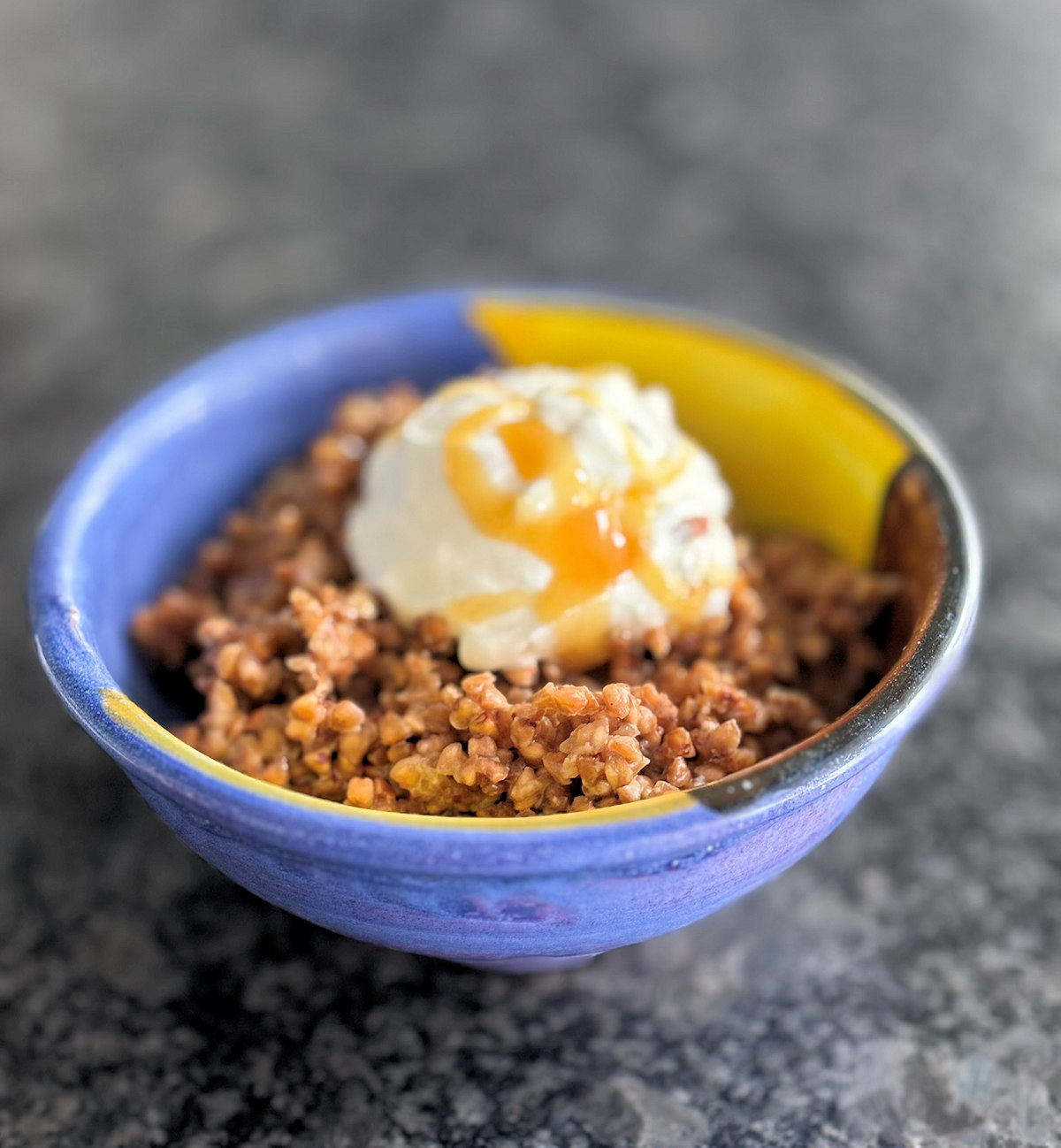
Buckwheat porridge: a Neolithic-worthy alternative to oat porridge, made from overnight soaked roasted buckwheat (kasha) for a comforting breakfast that’s older than bread and endlessly adaptable with sweet or savoury toppings.
Porridge: the base of the civilisation
It’s fascinating to think that the mushy gloop of grains enabled human race to thrive. The boom of homo sapiens in the Neolithic era is usually ascribed to the development of agriculture which in turn allowed hunter-gatherers to settle down and focus on civilisation development.
Which is all true but the really interesting nugget of knowledge is this: hunter-gatherer babies did not cope with the adult diet of berries and meat so were typically breastfed (a natural contraceptive) until the walking age. But once humans mastered growing and cooking cereals, perfectly fine to feed toothless babies, it all changed and population boomed. Doesn’t it make you see the bowl of gruel in a different light?
What is porridge?
As you might have (hunter) gathered, porridge might be one of the oldest cooked foods, as it’s simply cereal or grass grains crushed, soaked or cooked down with liquid to be easily digestible. It’s older than bread and older than booze, both having evolved from grain mush, the former baked on hot stones and the latter standing around fermenting.
Because that’s what porridge is: grains or seeds cooked in liquid. The grain might be rolled, cracked or pearled to speed the cooking process and make porridge easier to digest. The classic cereal used for porridge is oats but barley, rice, quinoa, buckwheat or polenta are used worldwide, whichever being the most commonly accessible, indigenous crop.
And the name probably comes from the French potage, meaning soup - or whatever cooks in the pot.
Buckwheat porridge must be ancient
Scottish oatmeal is the classic these days, especially in the UK. But it seems to me (not supported by any scientific evidence, just nice to think) that buckwheat must have been quite an ancient porridge material, at least in parts of Europe and Asia, considering that people might have foraged wild buckwheat before domesticating it.
Whether it wins the ‘oldest’ claim or not, it certainly makes excellent porridge which my, the simplest of the simple, recipe demonstrates.
Fancy buckwheat porridge recipe – not
And simple it really is. Pour milk over buckwheat, let it absorb, cook it briefly – Bob’s your uncle. Any other recipe you find online is invariably fancy, vegan, with coconut milk, chia seeds or both. If you’re not vegan or severely lactose-intolerant, why would you want to source bijou ingredients to make a simple breakfast? A bag of buckwheat (which is readily available in the roasted form) from the cupboard and a pint of milk from the fridge is all you need here.
Soaking is halfway towards cooking
You can combine the above two ingredients and cook the porridge on the morning but soaking dramatically shortens the cooking time. In fact, if you want buckwheat to put in salads and savoury dishes, all it takes is a soak in boiling water until the liquid is absorbed.
By the morning, most of the milk will have been absorbed and the buckwheat will swell considerably.
For porridge, you could heat up the milk and let the buckwheat sit and ‘cook’ like that as well but then it would a/ take a couple of hours we don’t have in the morning and b/ go cold. So if you pour it over with cold milk on an evening and chill it in the fridge overnight, it will then take mere minutes to cook for breakfast the next day. The only thing is remembering to set it soaking before going to bed.
This method of course makes for a chunky, chewy porridge with a bite – which in my books is the only acceptable form. If you want runny gloop, double the amount of liquid and cooking time – but we wouldn’t be friends.
Additions and variations
Of course all those fancy milks (and mylks) can be used instead old school cow’s. Likewise, the addition of butter is optional though it makes it smoother and nicer.
I like it topped with Greek yoghurt or with crème fraiche when feeling like an indulgence, with seasonal fruit and a drizzle of honey.
Alternatively, add to it a spoonful of jam or fruit compote.
Cottage or cream cheese will taste lovely too, in which case a pinch of salt instead of a sweet topping might suffice. You could also top it with a poached or soft boiled egg and a shaving of Parmesan.
More porridge recipes
Pinhead oat porridge bake for breakfast is good for the gut and for lowering blood glucose spike. With no added sugar, high in fibre and easy to prep ahead, pinhead aka steel cut oatmeal bake is the best way to start the day.
Honey millet porridge for breakfast provides a wonderful variety from oats. Hulled millet, tiny yellow beads toasted with cinnamon and cooked with honey is a lovely breakfast dish.
Coconut milk porridge recipe for a healthy breakfast. Coconut milk porridge tastes similar to cow’s milk porridge so the benefits are for those who think dairy free is a healthier option. Coconut porridge is ready in 5 minutes.
More buckwheat recipes
Galettes au sarrasin, buckwheat crêpes, with a classic topping of ham, cheese and an egg. The type of pancakes best suited to savoury toppings, galettes from Brittany are healthy and easy to make.
Easy one pan buckwheat with minced beef is inspired by Ukrainian hrechanky: savoury beef topped with fluffy kasha that steams over the meat. Finished with parsley, butter and yoghurt for a comforting, budget-friendly dinner.
Fermented buckwheat bread made from raw buckwheat groats and water: the most natural and the healthiest loaf possible. Leavened by soaked and fermented buckwheat pulp, it bakes to a loaf with a great flavour, and wholly gluten free.