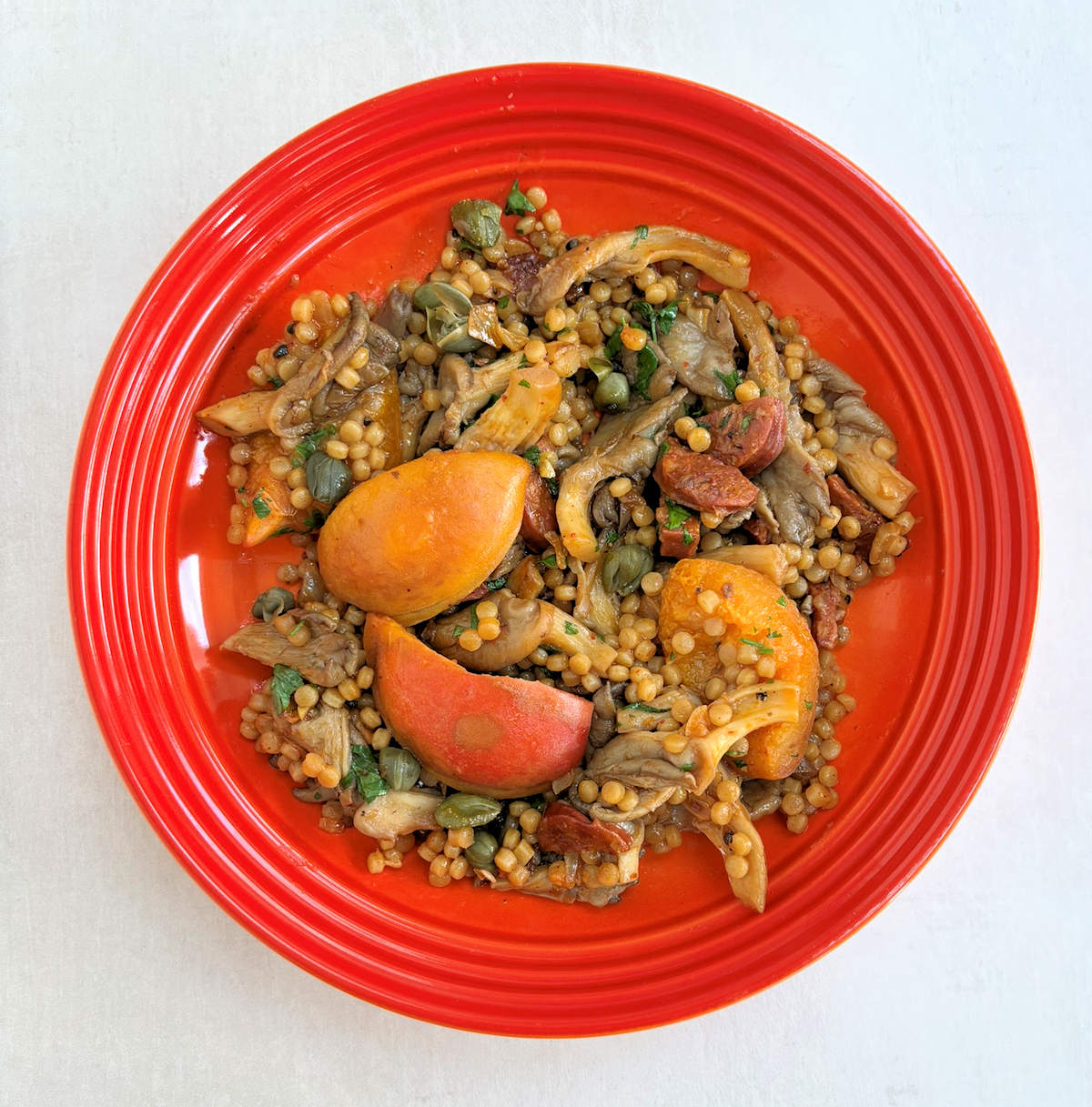
Giant wholewheat couscous with spicy chorizo, earthy mushrooms and sweet apricot quarters is a dish with lots going on – and all of it great flavours.
How nutritious is wholewheat couscous?
Couscous, as you might know, is not a grain though it is often mistaken for one. It is actually pasta of sorts, made from durum semolina wheat by rolling, steaming and drying the cereal grains, which makes it as a result very easy and quick to prepare but also a processed food. But before you take fright and shun all couscous from your wellness-oriented diet, note the fact that it is a staple of the Mediterranean diet and a very good carbohydrate. Especially the wholemeal type.
Like everything wholemeal/wheat, it is higher in fibre and in protein plus richer in micronutrients. It is made from whole grain semolina, with the bran and germ retained. It comes in a regular variety or giant – the latter not to be confused with ptitim, pearl aka Israeli giant couscous which is much closer in taste to pasta.
The common sense conclusion is to read the label. Wholewheat, be it giant or ordinary, is best prepared by hydrating and briefly simmering it, while giant (Israeli, pearl, ptitim) should be cooked like pasta.
How to prepare wholewheat couscous
Couscous is usually soaked in hot liquid until rehydrated and swollen. The ratio of liquid to dry couscous is 1:1, unless you want it extra chewy – less water – or softer – in which case more.
For this recipe, you need more water as the couscous will finish off cooking in the pan with the mushrooms and everything else, since it’s not a salad but a kind of couscous pilaf.
The initial soaking serves only to soften and hydrate the ‘grains’ and they finish off in the casserole.
You can use plain water but it will gain some initial flavour if you use vegetable (or chicken) stock/bouillon.
Cooking the aromatic base
Both the mushrooms and the apricots should be cooked, then removed from the pan to be returned later.
Apricots in quarters seared in a little olive oil will gain more flavour and sweetness.
Mushrooms – and I like to use oyster or king oyster, chestnut or a mix of the above – cut into slices or torn into strips in case of the oysters, get sweated and coloured in more olive oil, then go off to join the apricots.
And now it’s time for chorizo – and of course this can very easily be a vegetarian dish without any sausage or meat, like in the original version by Hugh Fearnley-Whittingstall which inspired me.
But if you’re going to include a meat element, chorizo will do very well providing its paprika-ish flavour.
Cut into half-moons, it should be fried till it starts to crispen, then joined by onions and garlic.
Seasoning
Note: the crushed cardamom seeds pack quite a punch in the finished dish so if you think you won’t like it, skip them, or add just a pinch of ground cardamom.
The kind of chilli powder I like to use in dishes like this, where you already have some spice from the chorizo and want to complement it, is gochugaru, Korean crimson chilli flakes, fruity and not too hot. But do swap it for hot or sweet smoked paprika if gochuigaru is unavailable or not desired.
Finish it with couscous
Once it’s beautifully seasoned, add the soaking couscous with any remaining liquid.
Of course you might be wondering if the couscous cannot be added dry at this point, and the water/stock poured in. The short answer: yes it can. The initial soaking softens it and makes the overall time on the hob shorter.
Pre-soaked, the mix will cook, covered, for about ten minutes. If you add the couscous dry at this point, you’ll need twenty minutes to half an hour during which time the chorizo might become a bit soggy.
Either way, once all the liquid is almost gone, the mushrooms and most of the apricots can return to the pan – a few reserved to look pretty in the bowls. With a good stir and another five minutes of cooking, it’s ready to serve.
How does it taste? Wonderful. The spice from chorizo complements bland-ish couscous, the mushrooms provide great texture and the apricots the surprising burst of sweetness. Make sure they are ripe though, otherwise the dish might end up slightly tart, which is not the point.
And it’s a reasonably quick weeknight dinner made in one pan, give or take a couple of auxiliary bowls for the washing up.
Variations
Hugh F-W uses fennel and mushrooms but I think my apricots are more interesting. You can swap mushrooms for butternut (or other) squash though if you like, and add a handful of frozen peas. Instead of apricots, plums or pears will be delicious too.
More couscous recipes
Lamb and couscous salad from Hairy Bikers is a feast of flavours: with cinnamon and harissa in crispy lamb, and dried apricots and saffron in couscous. The pomegranate dressing and seeds topping the salad make it look as pretty as delicious it tastes.
Couscous with asparagus chunks, toasted pistachio nuts and fresh herbs, it’s a warm salad of perfectly matching ingredients.
Giant (aka Israeli) couscous salad with tomatoes, roasted peppers and feta cheese. This is a great recipe for a vegetarian salad that can be eaten warm or cold.
More chorizo flavoured recipes
Butter beans and chorizo dish with crispy Parmesan topping, a little heat from a chilli and saltiness from anchovy. Beans and sausage, but not as you know it!
Chorizo and sweetcorn filo pastry pie with a cheesy layer of ricotta and cheddar mix is a delicious weekend family brunch dish or a dinner party centrepiece since it’s perfectly good to prepare ahead.
Crispy rice with chorizo and mushrooms blasted under the grill for super-crunchy breadcrumb and Parmesan topping. A dish based on the paella theme but ten times easier.