If your concept of scones is limited to cream tea, think again, however delightful cream tea undoubtedly is. These scones are savoury, fluffy and deliciously light, with no need for clotted cream.
What are scones?
Scones are simple bakes, vaguely related to pastry due to the method of making them by rubbing cold butter into flour at the start. But they are classed as sitting somewhere between bread and cake, rather than pastry.
Scones are of Scottish origin and the original ones were cooked on a hot plate or griddle, thus making drop scones, the Scottish pancakes, the forerunners of today’s cream tea heroes. Drop scones are made from runnier batter ‘dropped’ onto the hot surface then flipped. Which in my view makes them close relatives of crumpets though of course the latter are more bready and leavened with yeast.
But going back to the world of scones, those humble bakes are very versatile and certainly do not have to be sweet, spread with jam and cream (or whichever way round you want it).
Savoury scones
Any respectable British tearoom will usually have savoury scones as well as the sweet ones, although only occasionally offered as savoury cream tea, with chutney and cheese instead of cream and jam. Traditionally those savoury scones are cheesy, made with Cheddar oozing out of the dough whilst baking, forming a crispy lace trim around the scone as it cools.
And I do love them, but I now think the absolute best cheese for savoury scones is blue. The ones I present here (inspired by Great British Chefs’ recipe) are amazing: light and fluffy but strongly flavoured, and perfectly lovely just on their own.
But for extra indulgence you can serve them with chutney, fig relish, membrillo (quince jelly) or extra cheese on the side.
Which blue cheese for the scones?
Anything you have in the fridge will do: scones are frugal bakes so no need for premium, artisan Roquefort. Danish Blue, Saint Augur or inexpensive Stilton will do very well.
I’d however be careful with Dolcelatte or Gorgonzola: simply because they are much softer and the dough might end up impossibly sticky to handle.
How to make blue cheese scone dough
Scone dough is always made with a flour and butter base to which liquid and sometimes egg is added. The liquid is usually dairy: milk, yoghurt, buttermilk or a mix though Australians insist on using lemonade in theirs (with none too bad results).
This dough is the simplest: a little butter and the same amount of cheese is rubbed into the flour boosted with a rather hefty helping of baking powder and bicarb of soda. Then milk goes in a little at a time, until the dough just comes together because the secret to light scones is a light touch to the dough.
You can easily mix it by hand and if using a mixer, make sure not to overwork it.
Cutting triangles
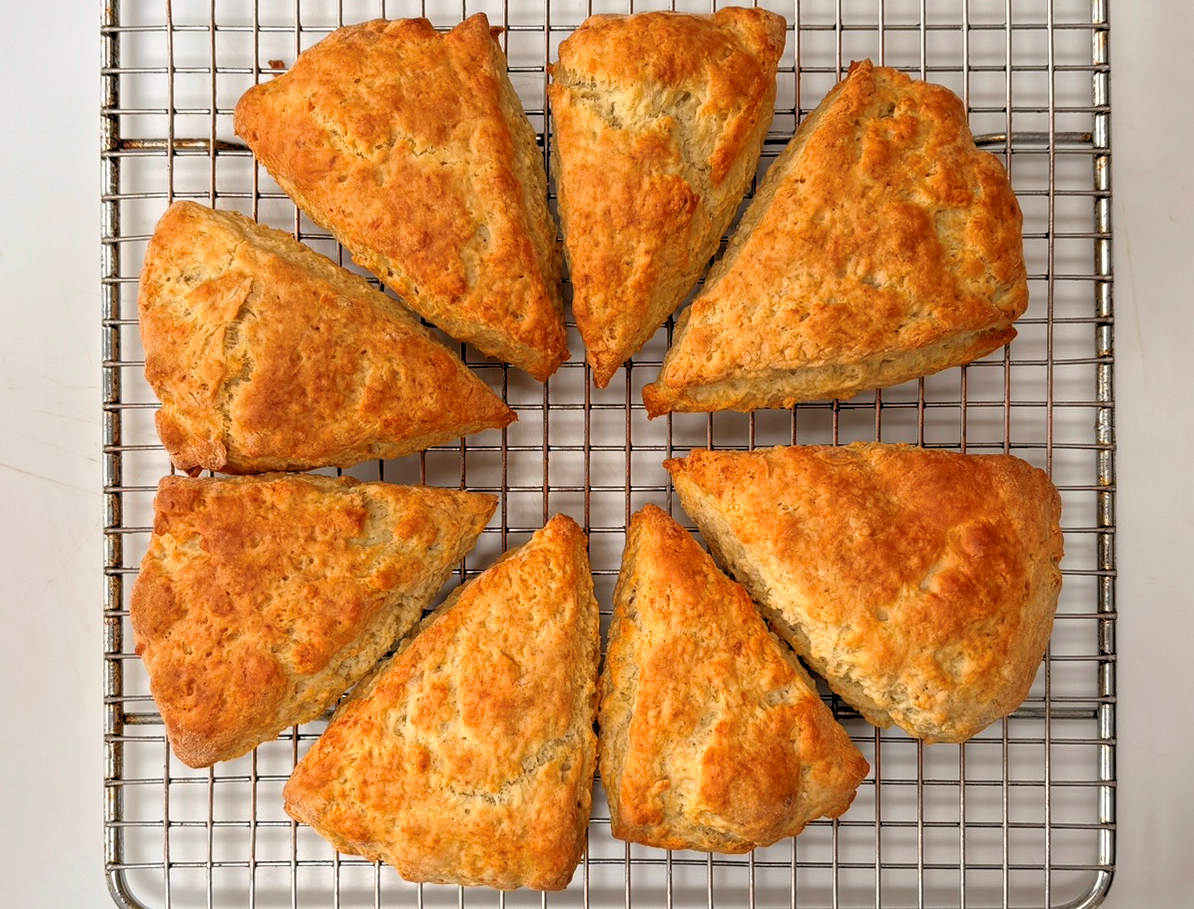
A good thickness of scone dough is about 2 – 2.5 cm so just about an inch. And here’s how to avoid the slightly annoying process of re-kneading and re-rolling the post-cut leftovers which will invariably produce inferior, wonky scones: cut the whole lot into triangles. Honestly, it’s so much less faff while obviously the taste is unaffected.
If you have a large dough scraper, a large knife or a cleaver, simply cut the dough into quarters, then into eight wedges. No leftovers. No re-rolling. No wonky product.
Baking scones
Any type of scone, sweet or savoury, benefits from resting in a tray before baking so in this instance the recipe does not start with ‘preheat the oven’!
And I say ‘in the tray’ intentionally because the deeper it is, the better the scones will turn out, thanks to the moisture retention during baking.
Storing
Without question, scones are best still warm from the oven. These are fine on the next day, but it’s best to freeze the surplus – if any surplus should you have.
More scone recipes
Recipe for traditional, plain English scones. My best scone recipe to date produces fluffy classic scones, as big or as small as you want to cut them. Homemade scones freeze very well though are really the best warm from the oven.
Cheddar cheese and chive scones, delightful warm from the oven, are made with wholemeal flour and diced Cheddar. The classic savoury scone option.
Parmesan scone loaf with whipped Stilton and cranberry sauce is the perfect Christmas breakfast idea from Monica Galetti. It can be baked in advance and sliced, toasted and buttered on Christmas morning or any morning of the year.
More blue cheese recipes
Baked figs with blue cheese, a drop of honey and a drizzle of balsamic can be a gorgeous starter, side dish, lunch or even a healthy dessert.
Blue cheese and oats biscuits, crackers, whatever. These savoury cheese and oatmeal cookies are easy to make and taste nicely different than the usual cheese crackers.
Broccoli and Stilton soup, easy, tasty and proper comfort food. This one is made without a blender, just chunkily mashed with a potato ricer.