They say barley risotto aka orzotto is delicious, but I think barley is much tastier when fluffy and only lightly buttered, served as a side dish or a salad base.
Barley barney
Whenever you mention barley, everyone immediately says how wonderful it is cooked like a risotto. But I completely disagree with them: if you want risotto, cook rice.
Barley should be cooked in plenty of water and drained, then used in various flavour combos. ‘Creamy’ doesn’t suit it in my honest opinion: it tends to become gloopy rather than silky-delicious.
But maybe it’s just an overhang from my childhood. In Poland barley (and not just barley…) used to be prepared very uninventively, boiled until mushy tender (they have a thing about soft food) then dolloped on a plate with some meat stew. It was not my favourite, in fact I refused to eat barley until relatively recently. Childhood traumas are difficult to get rid of.
Barley value
It’s worth trying to love it though because it’s a very nutritionally valuable ingredient. It’s lower in starch than wheat but rocket-high in fibre, even the pearl barley with its husk stripped that is usually available in the shops. It provides a reasonable amount of protein and it is scientifically linked to lowering ‘bad’ cholesterol. And may I add that Greeks and Romans used to feed it to gladiators?
It is one of those crops that, depending on the variety, is cultivated to feed both people and livestock. And last not least, malt barley is crucial in brewing beer, whisky and vodka.
How to cook barley
I overcame my barley aversion while chasing high-fibre foods to up my daily intake. As barley contains almost 5 g fibre per 100 g cooked grains, and only about 140 calories, it was a candidate to be definitely shortlisted. And as I mentioned at the start, the key to love it is to cook it fluffy, with each grain separate from each other rather than clumped into gloop.
It’s very easy to cook like that as it happens. No rinsing or soaking necessary, but about three times as much water as pearl barley in a saucepan brought to the boil. Then about half an hour’s simmer in the covered pan will tenderise the grains but leave a little bite.
After that it will, like rice, benefit from resting off the heat but under cover for ten minutes or so, and draining if there’s still some liquid at the bottom of the pan.
Barley cooked like this, cooled and stored in the fridge in an airtight container will easily last up to five days so it’s perfect for a meal prep. Cook up a storm of barley and decant a portion as you need, with or without reheating it, depending on what you want to prepare.
Barley in a rice cooker
It’s even easier if you have a rice cooker – barley loves cooking in it. No rinsing or soaking necessary, measure out three times as much water as barley, add a teaspoon of salt and turn the cooker on at the basic setting.
You might pop the lid to check it before the end of the programme: if all the water is absorbed and there are little tunnels visible on the surface, it’s ready to fluff up and proceed.
How to season barley
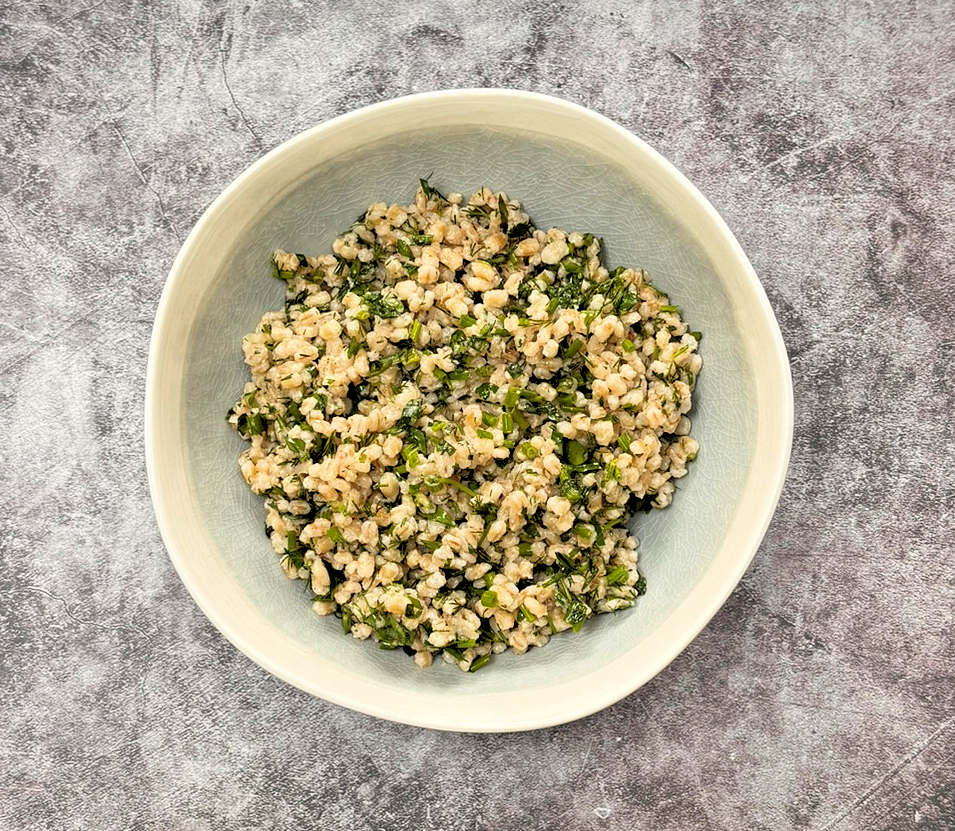
This is my favourite way with barley. It boils in salted water and when cooked, I whisk in quite a bit of butter. If your primary reason for including barley in your diet is the cholesterol control, swap butter for olive oil. It won’t be as delicious (in my view) but it will be healthier for you.
And then I turn the greige barley green, stirring lots of fresh chopped herbs. Make your own selection: I love them mild but if coriander and mint is more your jam, go for those.
And finally, for some extra fibremaxxing, I add a handful of frozen peas or petit pois, thawed in the microwave. Did you know that those little greenies were the ultimate fibre heroes?
Variations
Where to start? Use different herbs, you’ll get a different flavour. Skip the Parmesan but stir in some blue cheese. You’ll lose the fluffiness but add salty, tangy, umami depth.
You can stir some tomato sauce or even tomato puree through cooked barley, or you can squeeze in some lemon juice and grate a little zest.
If you hold the salt for cooking, you can stir in some miso with the butter. And though I personally don’t think it suits chilli heat, try adding a spoonful of gochujang or some chilli crisp in oil. Or harissa. Or ‘nduja.
Also, you could do worse for breakfast than cooked barley reheated in a microwave, sprinkled profusely with cinnamon and drizzled with honey.
More cereal recipes
Roasted root vegetables with spiced bulgur wheat are a vibrant winter dish. It’s the classic Christmas roast vegetable medley with a summery vibe.
High-protein spelt and edamame power bowl recipe: a fibre-rich, low-GI lunch with avocado, egg and sauerkraut that keeps you full until dinner. It’s an easy meal-prep, endlessly adaptable and ready in minutes.
Couscous with asparagus chunks, toasted pistachio nuts and fresh herbs, it’s a warm salad of perfectly matching ingredients.
More high-fibre recipes
Pearled spelt and cannellini bean salad with rose harissa dressing is a delicious lunch option, convenient if you prepare the ingredients, store them in the fridge and mix just before serving. It’s a recipe for a healthy, filling and delicious meal.
Savoury oat and seed bars are healthy and delicious. They are high protein, high fibre snacks, like a flapjack or granola bar in a savoury version. Very easy and super versatile: try baking a batch for healthy, filling and guilt-free treats.
Brown butter lentil and sweet potato salad is a delicious combo of roasted sweet potato chunks, green or puy lentils cooked from scratch and a super flavoursome dressing made with sage leaves and brown butter. With crumbled blue or goats cheese on top, optionally.