A classic, inspired by Nigella Lawson’s clementine cake, perfect for when you have a few oranges a little past their best.
Oranges: skin, pith and all
Anyone who had never heard of this cake will invariably be taken aback: whole oranges, with the peel and everything? Surely this will make the cake awfully bitter? Also, boiling oranges? That’s seriously strange.
But trust Nigella, of course, and trust the eminent food author Claudia Roden, who devised the original recipe. Boiling oranges might sound unusual to the western sponge batter mixers, but Claudia is of Middle Eastern origin where they are far more inventive with both citrus and baking than we are. Suffice to say, Claudia Roden is cited as a major influence on Ottolenghi.
Oranges and other citrus
My version of the recipe uses blood oranges, but ordinary ones can be substituted outside the bloody ones’ season, as long as they are reasonably small. Blood oranges also have thinner skin and though I assure you the cake is not bitter, too much of the peel might negatively affect the taste.
Cooking time will not be awfully long either when medium sized oranges are used. Therefore, I expect, Nigella’s version is with clementines considering their small size.
Boiling the oranges
It will take about an hour and a half for the oranges to soften in a simmering pan of water. It is a good idea to try and submerge the fruit by weighing them down with a heat resistant saucer or bowl. Otherwise they will persist in floating to the top and bobbing on the surface, giving an obsessive person like me an impression that only the bottom half of them is cooking.
They might burst or crack but that’s not to worry about. When cooked, drained and cooled a little, they need to be sliced in half to remove any pips, then puréed in a blender or a food processor.
How to make the cake batter
The cake is gluten-free, which is of course an enormous plus for the gluten-intolerant unfortunates. But the use of ground almonds instead of flour makes it awesomely tender and moist – it’s a properly ‘wet cake’, as some call it.
Another plus, it’s a butterless cake. The oranges combined with quite a lot of eggs make it rich enough so you’d never guess there is no fat in it. Which makes eating it feel slightly less sinful.
Once the oranges are pulped, it’s an easy job. Start with eggs and sugar, beaten together until slightly fluffy and paler. Nigella claims you can do it all by hand but I find the cake rises much better and its texture is lighter if an electric mixer is used to put some oomph into the batter.
Egg mixture is then combined with almond flour, with a little baking powder, and finally the orange puree is mixed in. Three medium blood oranges are slightly too much and might make the cake a bit too wet and squishy, so don’t meticulously scrape every bit of the pulp from the blender.
Baking and cooling
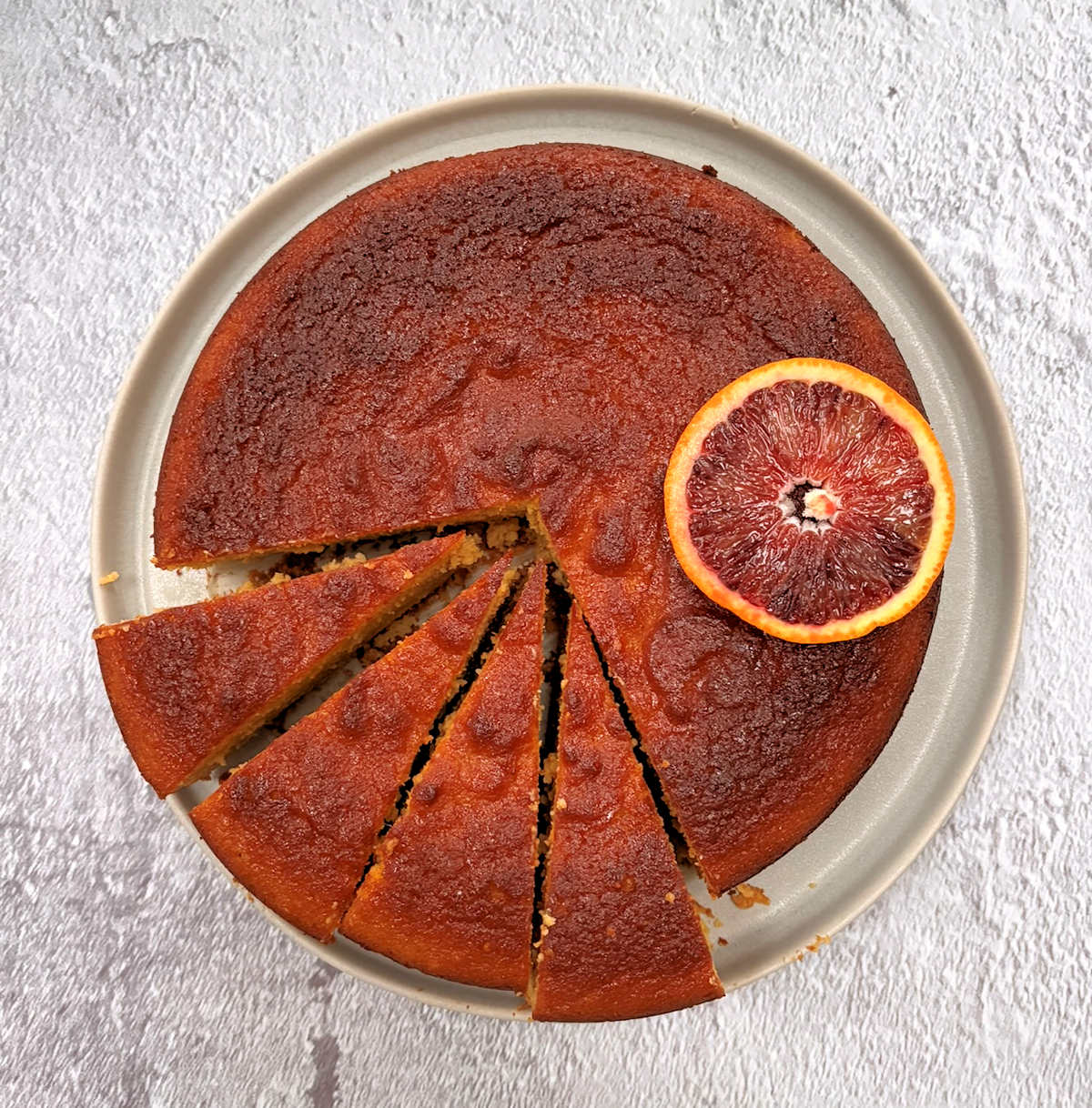
It bakes a long time, about an hour, and it’s ready when it passes the skewer test and starts pulling away from the sides. It will be lovely, burnished brown when it emerges from the oven, thanks to the vibrant colour of blood oranges.
The cake needs to cool completely before unmoulding, and it is as tasty if not more so on the following day.
It will keep at room temperature for three days or so, and another couple of days in the fridge.
More blood orange recipes
Blood orange posset is the easiest three ingredient dessert which is also a traditional English classic. Blood orange season is long enough to make this gorgeous pudding several times, including an individual, microwaved version in a mug for one.
Blood orange and poppy seed muffins recipe, easy and quick, makes a lovely dessert or post-brunch or lunch sweet. You can add chocolate chips to the mix.
Mixed citrus and radicchio salad is bursting with vibrant flavours. Peeled and sliced blood and regular oranges, grapefruits, and zesty radicchio, this bitter sweet symphony is perfect for a light lunch or as a colourful side at dinner. Also, rich in vitamins and antioxidants!
More orange cake recipes
Blood orange loaf cake bursting with flavour of those late winter seasonal beauties, blood oranges. The zest, the juice and the segments of blood oranges make up a wonderful dessert, mixed into a very easy, buttermilk and olive oil batter.
Orange flavoured ciambella with dark chocolate glaze is an Italian ring-shaped breakfast cake. This one is made without butter but with olive oil; serve it for an indulgent breakfast or for dessert.
Dan Lepard’s orange and walnut loaf cake with cinnamon and fresh ginger, a wonderful combination of flavours. One saucepan, a loaf tin and zest from five oranges!