Roast pheasant is never dry if it’s been brined overnight in a fragrant, salty solution, then roasted with a maple syrup glaze. Delicious with sprouts and mushrooms.
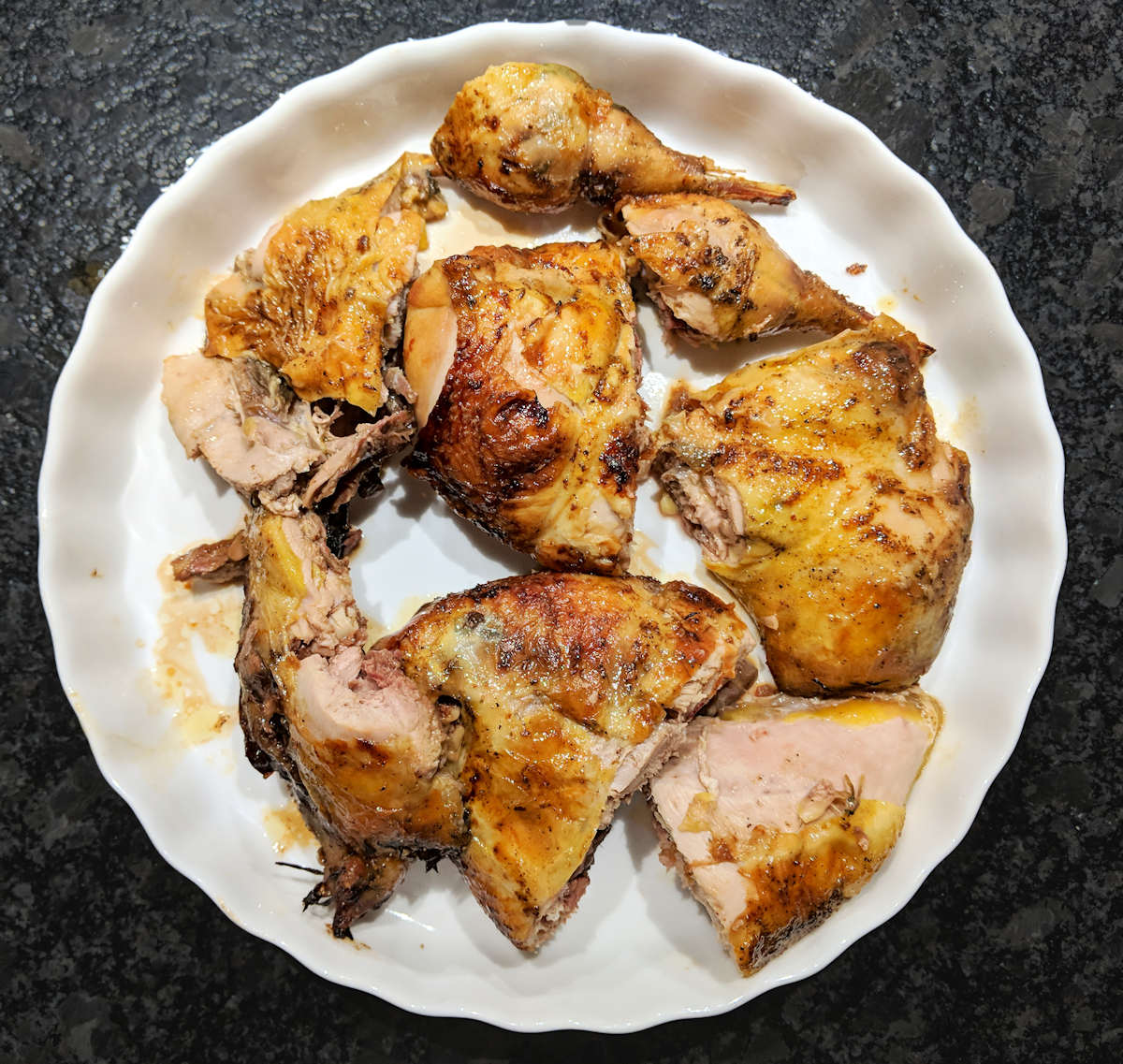
Game birds needn’t be dry
Wild-reared, free range pheasants are more sustainable than the ones commercially reared and released for shooting, by often half-cut, often American shooting tourist parties. But if proper guidelines are observed, even rear-and-release game meat is more sustainable and ethically acceptable than many farmed poultry producers. It is as important to find out where your game meat comes from as it is with beef or pork.
I like game birds in general with wild duck being my favourite, followed by wood pigeon which tastes like a cross between beef and liver, and pheasant. But I enjoy it as long as it has not dried and shrivelled in the oven.
The solution is salty (haha): brining does the trick. It really makes a difference. Soaking meat in a salty solution ensures juiciness, as meat fibres become hydrated via osmosis. It also gently starts the cooking process as salt denatures proteins, making them more relaxed whilst cooking and thus less tough. Plus, it flavours the meat up front, and thoroughly, instead of merely the surface which sprinkling with salt just before cooking would do.
How to brine?
The main ingredients of any brine are always salt and a small amount of sugar. The salinity ratio depends on how long you intend to brine the meat for. Standard brine salinity is 5%, i.e. 50 g salt per a litre of water. That strength is meant for brining the birds for up to 8 hours. If you are planning on keeping the pheasant longer in the salty solution, overnight or longer, cut the salt to 3%: 30 g per litre.
Apart from salt and some sugar, aromatics are commonly added to brine: juniper and bay leaves in this instance. You can also add a bruised rosemary sprig.
Brine should be used at room temperature so dissolve the salt and sugar in hot water, then let it cool right down before dunking the bird.
How to roast?
Out of the brine, the pheasant has to be thoroughly dried with paper towels, and ideally sit in the kitchen for a while so the skin is not soggy.
It’s a lean bird so it will need to be buttered all over, generously. Seasoning now is only black pepper – the salt has already been taken in whilst brining.
A small onion goes into the cavity as an extra aromatic, and you can use another one to prop up the bird: pheasant have the propensity to fall over onto one side in the oven.
The first fifteen minutes of roasting is in a very hot oven, and in the meantime you can prepare the glaze by heating up maple syrup with a small chunk of butter.
After fifteen minutes the bird comes out to be glazed, while the oven goes down to medium. The second stage of roasting will take about twenty to thirty minutes: the former for a medium-rare, the latter for medium.
Of course the best gauge is a digital probe inserted in the thickest part of a leg. It should show 63C/145F for medium-rare and up to 80-82C/175-180F for well done.
Roast, then rest
Resting is as important as roasting, if not more important. And the longer roast meat rests, the better (within reason).
During resting the protein fibres relax, allowing the juices to spread from the centre – where they concentrate during heat exposure – to the whole roast and to settle. The temperature evens out, and if you use a digital probe, you’ll have noticed it goes up during resting, by as much as 10C in large joints. That’s because the heat from the centre extends, like the juices, evenly throughout.
In very simple terms rested meat becomes tenderer, evenly cooked and doesn’t squirt juice all over the cutting board when carved.
Carving pheasant is rather difficult so I'd advise cutting it into 6-8 portions with poultry scissors before serving on a platter, rather than letting the diners hack at halves of the bird helplessly. Unless of course they’ll go at it with their hands and eat with their fingers, medieval style.
What to serve with pheasant?
I think it’s lovely with seasonal Brussels sprouts, and/or mushrooms. If it’s a special occasion or you just want to make an effort, you can cook some game chips which are homemade potato crisps served hot for dinner.
Brussels sprouts with bacon
To prepare Brussels sprouts, I’d advise blanching them for a couple of minutes in boiling water, then drain. They’ll be delicious with crispy diced bacon, so fry it until crisp in a sauté pan then add the sprouts.
Cover them with a lid and continue cooking on low heat for about 15 minutes. Season them well with pepper, judiciously with salt and perhaps toss with some ground or flaked almonds.
Mushrooms with spinach
For a side dish of mushrooms, cook them in a little butter with some pressed garlic cloves and plenty of salt and pepper. You can stir in some fresh chopped spinach at the end and keep stirring, so the moisture evaporates while the spinach wilts.
More game bird recipes
Roast wild mallard duck, easy to cook, tender and full of flavour. Female specimen are plumper but if in doubt, salt the mallard in advance to tenderise it.
Roast partridge with bacon and pears, an easy recipe for a good game bird. Partridge doesn't taste too strong and isn't too dry if cooked right - here's how.
Roast grouse served with game chips is the finest game bird dish, a delicacy suited to connoisseurs' palates. To cook this fine bird, brine it then sear in a pan and briefly roast in the oven.
More pheasant recipes
Braised pheasant with chestnuts, tender and flavourful, it is also the ultimate sustainable food and free range meat.
Pheasant meatloaf is juicy, flavoursome and gutsy, and wild game is the best choice of meat both for your health and for the environment.