An alternative recipe to my classic mince pies, it contains no nuts in the mincemeat or almonds in the pastry dough.
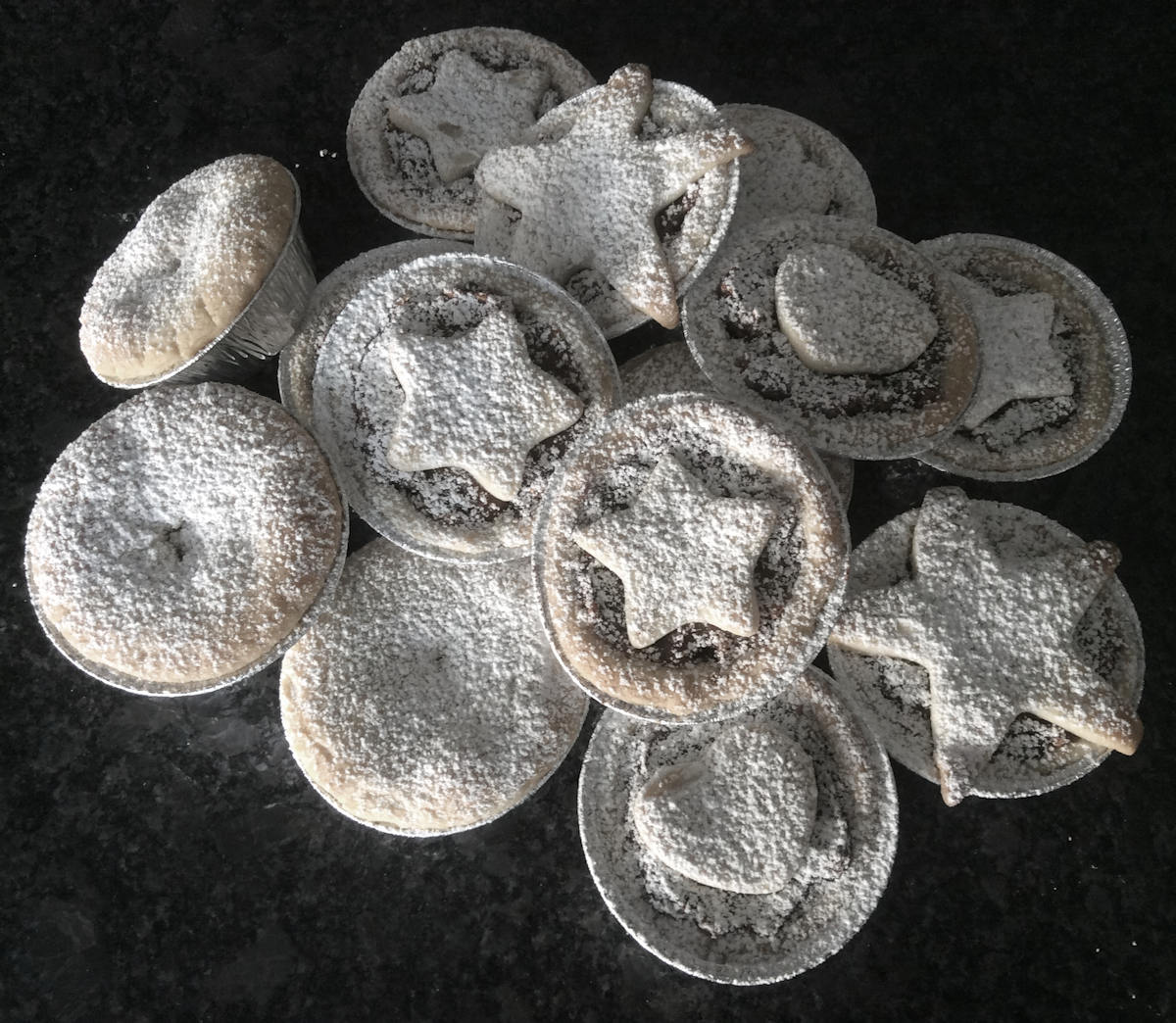
Homemade mince pies trump them all
I never used to like mince pies until I made them at home. The fact is that all shop-bought pies, even the posh and fancy, taste of too much orange peel and too much booze. As much as I’m the last person to complain about too much booze, I like to keep it separate from my cakes.
The second worst move after buying mince pies is to buy your mincemeat in a jar. I really don’t understand what you would do it, unless you bought ready-made pastry as well and cheat all the way. Otherwise it doesn’t make sense: pastry is relatively difficult to mix, handle and roll out.
But mincemeat is a doddle. Even if you stir together random dried fruit and add a banana or an apple to hold it together, it will still be better than the stuff from the jar.
Lighter mince pies without nuts
Another huge argument for baking pies from scratch is the consideration for the people who can’t eat nuts as most shop-bought pies and jars of mincemeat usually contain plenty walnuts, hazelnuts and almonds.
As Christmas is tough enough already for nut-allergy sufferers, with nutty confections galore, it’s best to make the nut-free pies at home, ensuring no sneaky almond has crept in.
This is a lovely mincemeat, nut free but full of fruit. It is also slightly lighter as it contains no butter, just a combo of whole, chopped and pureed fruit, dried and fresh.
How to make the shortcrust pastry
This type of pastry is egg yolk-rich which makes it delightfully velvety and not too crumbly. But because of that it needs to be started off by beating the egg yolks with icing sugar. Then you add softened butter beating it in gradually, following with flour until the mixture comes together and forms a ball.
Chilling and warming
Mixed pastry ball needs chilling in the fridge for at least an hour and up to 24 hours. Resting it in cold conditions lets gluten in the dough relax which makes it more pliable when rolling and shaping, as well as stops it from shrinking whilst baking. The same occurs when the pastry is frozen and any shortcrust dough (to my best knowledge) can be frozen for up to a month or so.
When it emerges from the fridge though, it should be allowed to warm up a little before rolling it out, otherwise it will crack. It is also prudent to keep cut pastry bottoms and tops chilled, so they go into the oven cold, for the butter in the dough not to melt too soon. Of course it sounds a little pointless: chilling then warming up again, but each temperature change serves a different purpose.
How to make the fruity mincemeat
It is even easier to make than the classic mincemeat with nuts, because its base is figs, dates and a banana blitzed to a paste in a blender (apologies to those that don’t own a blender, you’ll need to chop it very finely by hand. Also, buy a mini blender).
All the other ingredients, dried fruit selection, citrus peel, spice, port, orange juice and a dollop of good apricot jam are then mixed into this base. The mincemeat will keep very well in the fridge for a good couple of days and it can also be frozen.
What tins or moulds are best for mince pies?
If you’re baking them for home consumption, use a 12-hole (sounds like a golf course) mince pie or bun tin with shallow holes about 6 cm/2 ½ inch in diameter.
But individual foil cases are also widely available and I usually go for a job lot of those, biannually. They are perfect if you want to gift your pies, as I do, though obviously it isn’t environmentally ideal as they are disposable.
How to assemble the mince pies
The pie bottoms need to be cut first and you should use a cutter that is slightly larger than the tin or case hole, to allow for the depth. So if the tins are 6 cm wide, use a 6.5 cm pastry cutter.
The best pie workflow is as follows: remove the pastry out of the fridge and let it rest while you make up the mincemeat. Then roll it out, in batches, and cut the pie bottoms. Insert them into the tin or cases and transfer to the fridge while you cut the tops.
Since the tops can be any shapes you like (as long as they are festive), cut your stars or Christmas trees and place them on a tray to follow the bottoms into the fridge. If you want lids for closed pies, cut them exactly the size of the tin/case holes, and so using a cutter one smaller than the bottoms.
The tops on the tray go into the fridge, the bottoms come out while the oven heats up. Fill the pies generously but not stupidly packed. And it’s time now to adorn them with the tops, and for the closed up ones, crimp the edges with a little fork around the pie circumference to help the lid stick.
Baking, icing, storing
Bake them until they are only ever so slightly coloured around the edges – nothing worse than overbaked shortcrust pastry.
And they don’t need any more elaborate icing than a liberal dusting with icing sugar.
Store these mince pies in an air-tight tub or a jar, for up to a couple of weeks.
More Christmas baking recipes
Traditional Christmas fruitcake, my family recipe going back three generations. Polish Christmas keks, teacake or fruitcake, is lighter and more delicate than its English counterpart, though its name is derived from English Christmas cake.
Gingerbread biscotti spiced with Christmas flavour, crunchy and dunkable, with mixed nuts and cinnamon sugar coating. Honey and spice and a festive spirit twice cooked!
Stollen bites, mini treat versions of the German fruited Christmas log. I make them with pistachio marzipan and apple marmalade and they are completely irresistible.
More mini pie recipes
Mini cranberry pies, shortcrust pastry made from scratch filled with easy to make cranberry butter instead of traditional mincemeat. Mince pies? Make mine a cranberry this Christmas!
Butter tarts with maple syrup, traditional Canadian treats. Classic butter tarts with flaky pastry thanks to addition of vinegar to it. Fill the butter tarts only halfway up to stop the filling from boiling over.
Financier biscuits, French mini almond cakes made with brown butter are deliciously moist, light and tender, a little like madeleines and really easy to make.