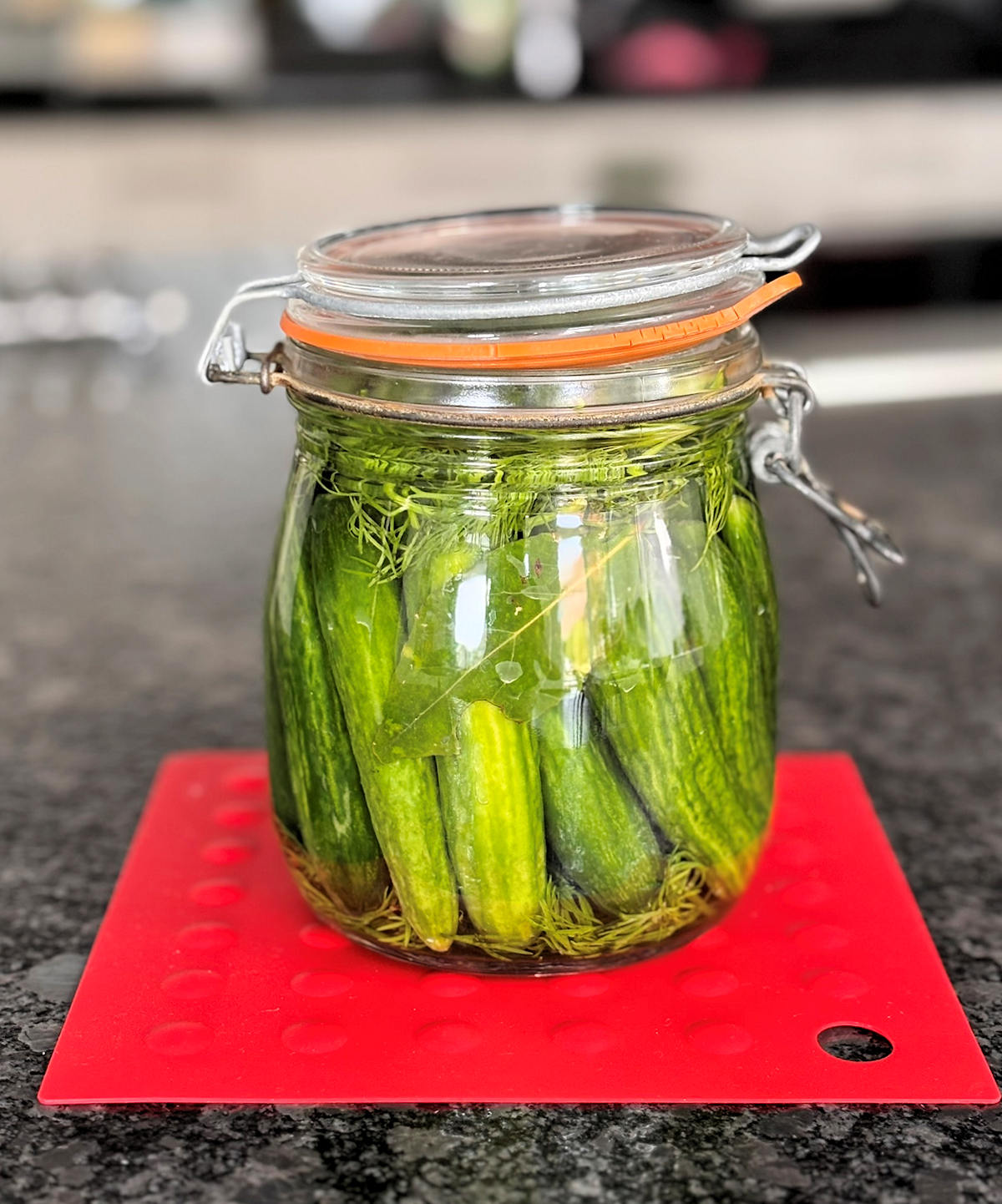
These are very well known and much loved in my native Poland: ogórki malosolne, lightly fermented cucumbers. They are crunchy, not too salty, fragrant with dill, garlic and/or horseradish, and they are probably one of the healthiest snacks there is. Unless, of course, you have them with a beer which to be fair makes a wonderful pairing.
Not everything is pickles
We are big on fermenting in Eastern and Central Europe, as everyone knows. The famous pickled gherkins from Goodbye, Lenin!, sauerkraut, kefir, salted herrings, those types of foods have gained enormous popularity since the world discovered that fermenting bacteria are good for the gut.
But I need to remove the ‘Lenin’ gherkins from my list above because fermented foods need to be told apart from pickles. In western cuisines it is usually vinegar that preserves vegetables which is not at all gut friendly.
How does fermenting work?
Fermenting is different from pickling. The Polish, German and so on fermenting process is all about lactic acid bacteria turning sugars from the vegetables into lactic acid, thus giving the food a tang and preserving it. It is an anaerobic process which means the food is submerged in brine, with no oxygen to spoil it.
Salt is instrumental in vegetable fermentation as it keeps harmful bacteria and mould at bay, encouraging the friendly, lactic acid bacteria which thrive in a slightly salty environment. In the case of sauerkraut salt is massaged into shredded cabbage and the brine is created purely from the moisture released by cabbage, without adding any water. Cucumbers are fermented whole so they would not give out enough moisture to create brine, and so water needs to be added.
The fermentation process takes from a couple of days in the case of these cucumbers to several weeks for thoroughly soured kraut - or beetroot, since you can ferment a variety of vegetables this way.
Soured vs lightly fermented cucumbers
These cucumbers are a very seasonal food and have to be distinguished from saure gurken – soured cucumbers (here I lament the lack of English words for fermented foods, in spite of their recent popularity!). ‘Malosolne’ are an early summer product, made with small, almost gherkin-style produce available in Poland and thereabouts in June and July. They are quickly fermented and ready to eat in a couple of days, not meant to last but to be consumed quickly.
Soured cucumbers are a proper preserve, like jams or pickles. They are made with cold, saltier brine in sterilised jars, further canned in a water bath to seal them.
What kind of cucumbers can you use?
It isn’t an easy recipe for Brits, I have to admit. Common cucumbers available in the shops are the enormous, long and not very tasty English ones. Baby cucumbers are simply picked early and they might be suitable albeit costly, working out at over £6 a kilo. Specialist producers offer raw gherkins, but at even a higher price.
The best option is to check the local markets, especially ones that will cater to more ethnically diverse locality. Other than that it’s your allotment or a garden plot that will provide them – like mine does.
How to prepare lightly fermented cucumbers
Once you’ve procured a good pound of nice, small cucumbers, first find a jar or a glass, earthenware or clay container that will fit them snugly. Then soak them for a few hours in cold water – it will make them extra crunchy. When ready to go, drain them and pack into the jar, thoroughly clean and rinsed with boiling water, with sprigs of dill and other aromatics (more on that below).
The brine proportions are 1 tablespoon of fine sea salt per 1 litre of water, and 500 ml or a pint will be enough to fill one jar. Stir the required amount of salt into hot water from freshly boiled kettle – I wouldn’t use tap water, however hot it comes out. Add a large pinch of sugar, for the flavour, and pour over the cucumbers in the jar.
The hotter the brine that goes into the cucumbers, the faster the fermentation will occur. If you want to delay the process a little, let it cool to just warm.
Make sure the cucumbers are covered with brine, put the lid on the jar but don’t tighten it, or simply cover the container with muslin cloth. Wait two days and have a tasting session.
Aromatics
Dill is usual to add to these cucumbers, even overgrown dill with thick stems. Peeled garlic cloves are gorgeous, as are hot chilli peppers.
Traditionally in Poland you also add chunks of fresh horseradish but it’s not widely available in the UK. But bay leaves, oak leaves or vine leaves are, and they will make the cucumbers firmer and more flavoursome.
You can also slip a few berries of allspice or juniper in.
Fermentation
Once prepared, it’s exciting to observe the process in the jar – unless it’s not a transparent container which will serve well, nevertheless. After the first 24 hours the brine will go a little cloudy and foam up a bit on top. After another day a white sediment may settle at the bottom of the jar. All that is fine and natural signs of fermentation.
Once you’ve tasted the cucumbers and deemed them to your liking, transfer the jar into the fridge to slow down the process. They will still gradually turn sourer, but I think they will have gone before they get too sour – they are that delicious!
How to serve the lightly fermented cucumbers
As said, they are a delicious snack but will also make a good side dish with various meats. They go particularly well with a portion of chips or fries.
And obviously you can use them in all the otherwise gherkin situations – burgers or hot dogs – with a benefit to your gut health.
More cucumber recipes
Chinese smashed cucumber salad with rice vinegar. Make this Asian smashed cucumbers salad as spicy as you like with chilli flakes or red pepper flakes.
Fresh cucumbers with feta cheese and honey are a minimalist version of Greek salad and all the better for skipping tomatoes – mainly for your digestion.
Stir-fried cucumbers Asian style, with ginger, garlic and a pinch of chilli. Spicy but also refreshing which is logical as cucumbers are 96% water.
More fermented food recipes
Fermented red cabbage with chillies and ginger, Europe’s answer to kimchi. Red cabbage sauerkraut is made exactly like the white but it’s vibrant and a bit more crunchy.
Sauerkraut has many health benefits being a probiotic-rich food and a source of fibre and numerous nutrients. This is an easy recipe for homemade spiced sauerkraut ready in 1 - 3 weeks.
Basic kimchi is made with Napa cabbage, called Chinese leaf in the UK. To make kimchi, you salt the cabbage, then add spice paste made from gochugaru, Korean chilli powder, fish and soy sauce and leave to ferment for up to a week.