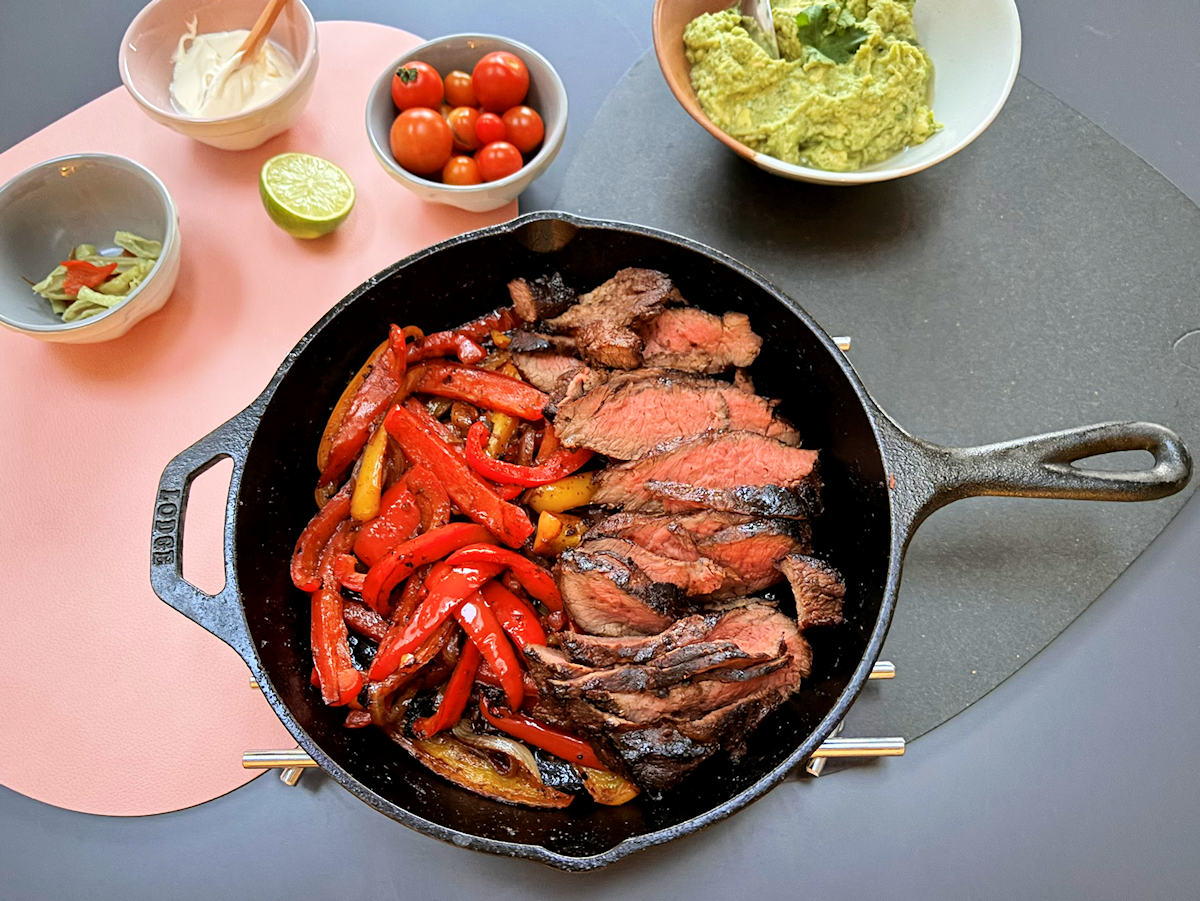
Skirt steak sizzlers, fajitas, with pepper and onion slices, both marinated in a fragrant and heady spice mix arrive on a sizzling skillet to be wrapped into a warm tortilla for a deeply satisfying Tex-Mex experience.
What are fajitas?
Tacos, nachos and fajitas – those Mexican dishes are often bastardised when out of Mexico, but even in their inauthentic versions they are utterly delicious and widely loved.
But as it turns out, fajitas are neither Mexican nor indigenously authentic. ‘Fajita’ means ‘little belt’ and that refers to the offcuts of beef from the chest muscle known as skirt or bavette. Thus if you encounter ‘chicken fajitas’ on your restaurant menu, they are the bastardisation I was talking about.
Original fajitas were strips of freshly butchered beef skirt given to hired Mexican cowboys as part of their pay during cattle roundups in Texas. The meat would be spiced up then cooked over open fire, often with onions and peppers.
From campfire to restaurants
In the 1970s those grilled steak strips found their way to the restaurant menus, first in Tex-Mex outfits of Houston and Austin, then gradually into Mexican restaurants all over the US. And from the 1990s they have become a firm fixture in fast food chains like Taco Bell.
The traditional campfire barbecue has turned into a sizzling hot plate, with the onions and peppers cooked alongside the meat, and the fajitas served with classic condiments (salsa, guacamole, soured cream or grated cheese) and warm tortillas.
And as it often happens, the main ingredient branched off from skirt steak into chicken, pork, seafood or even vegetable options.
Fajitas vs tacos
For us Europeans it is quite hard to grasp the difference between fajitas and tacos. Meat filling in a tortilla is surely a taco? And technically, once you’ve filled your tortilla with the steak fajitas, you have a type of taco.
But fajitas come to the table on the sizzling hot plate or skillet, and they are assembled DYI-style on your plate. Tacos arrive already filled and the shells are usually smaller and often crisp.
Secondly, taco fillings include a variety of foods, from beans to stews, while fajitas are always grilled meat or vegetables.
And thirdly, the toppings are classically peppers and onions instead of just lettuce or tomatoes added in tacos.
How to marinate the steak for fajitas
I follow Kenji Lopez-Alt’s brilliant recipe from The Food Lab, and it works a treat every time. The marinade mix includes the spicy, the salty, some acid and a little sweetness and it’s hard to better. The same marinade mix is used for the meat as for the peppers and onions, which is clever.
Since its name refers to the specific cut of beef, skirt steak, that’s what you should use. But sometimes it’s hard to procure those cheaper and better value beef cuts so you could use rump, sirloin or ribeye instead. I certainly wouldn’t waste fillet steak on fajitas – save it and serve it as a steak instead, as fajitas are supposed to be thrifty and cheerful.
Marinating should take between three and six hours. Longer than that, and the acids and soy sauce start to ‘cook’ the meat, spoiling the texture somewhat.
How to cook the fajitas
You can obviously grill them, but I’m not a barbecue expert and I trust the hob much more. I recommend using a heavy frying pan, ideally a cast iron though note that the acidity of the marinade might damage your pan’s seasoning. It won’t be a write-off by any means but might need re-seasoning.
Get the pan screaming hot, brush it with oil and cook the steak, patted dry after the marinating, for about two to three minutes on each side for skirt, adjusting the time for sirloin or rump if those cuts are thicker.
And most importantly, let the meat rest for at least ten minutes off the pan – the fajitas will return to the pan (or a sizzling plate) once rested.
The onions and peppers will cook in the same pan while the steak rests, until softened and appetisingly scorched.
Once rested, the steak can be thinly sliced against the grain, returned to the pan on top of the vegetables and carried (sizzling or not) to the table, to be served with warm tortillas, guacamole and other typical condiments.
More Mexican recipes
Cheesy bacon and sweetcorn enchiladas with red salsa, made with crisp, toasted corn tortillas. Assemble and bake them straight away, so they don’t get soggy standing around.
Corn tortilla chip nachos with easy homemade beef chilli, sweetcorn and cheese. Homemade nachos are the perfect recipe for a crowd-pleasing supper or snack.
Easy slow cooked chilli con carne with minced beef, cannellini and red kidney beans, ancho and chipotle chillies and a pinch of cocoa powder. Both dry and tinned bean options in my recipe.
More beef steak recipes
Spicy seared bavette steak, seasoned with a dry rub of chilli flakes, oregano, garlic and a secret umami agent: dried mushroom powder.
Reverse seared ribeye steak served with umami flavoured compound butter. The perfect steak, cooked in reverse: first low temperature, then a blast of heat.
Cote de boeuf is a rib-eye steak on the bone, also known as tomahawk steak. This is a simple recipe for a sparingly seasoned, seared and roasted cote de boeuf, ideal for sharing.