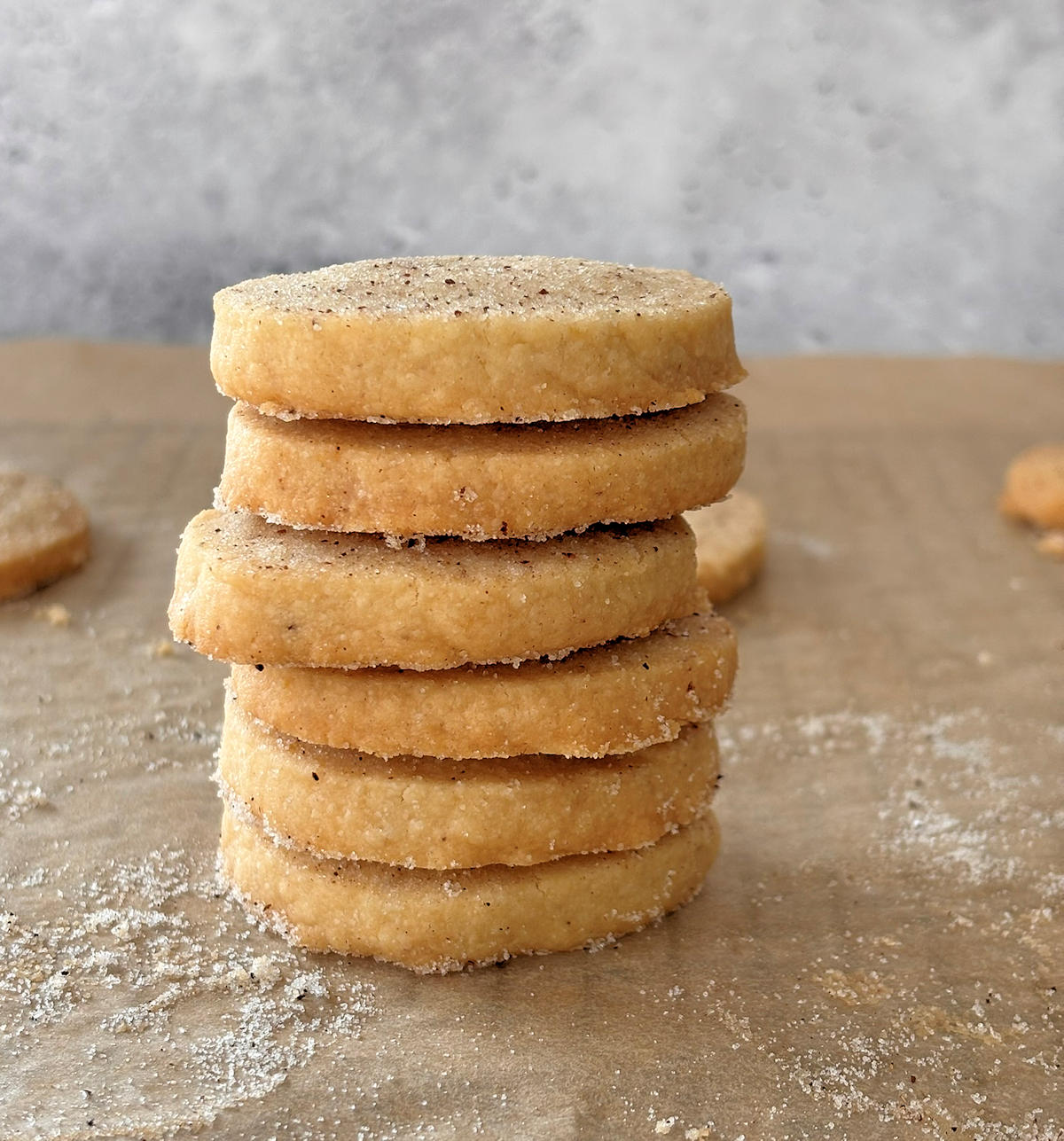
Nothing like a shortbread with a cuppa! Dunkable, melting in your mouth biscuits with a hint of exotic sumac and cardamom.
The secret is in the flour
The recipe for a shortbread dough is blindingly simple: flour, butter and sugar. Quickly kneaded together, with or without the help of a food processor, chilled then cut, and Bob’s your uncle.
But depending on the flour mix you use, the resulting biscuits might be very different. The bulk of it will be plain flour, or all-purpose in America. Small additions of other types of flour though will give you varied outcomes. The additional flours will normally be non-wheat, in order to lower the gluten content and make the biscuits crumblier.
Rice flour
A small amount of rice flour is what I use in this recipe. It is widely available to buy, and both brown rice and white rice flour is suitable.
The shortbread made with rice flour is of the classically ‘short’ texture, very crumbly and melting in the mouth. The downside for those who dunk: you might easily lose half a biscuit in the cuppa if you overdunk.
Corn/potato flour
Corn flour or potato flour, with no discernible difference between the outcome each delivers, will make the texture still ‘melting’ but not quite as dustily crisp. The biscuits will be softer though not chewy. Arguably that makes them better dunkers, but most people prefer the crumblier texture.
Ground almonds
I love that version, though one might say the almonds turn the product into something slightly different than traditional shortbread. The crumb will be richer, the texture coarser and the flavour nuttier. Dunk rating – better than the previous two varieties.
Spelt, rye, buckwheat
These won’t make as pronounced a difference to shortbread pastry as the above ones. All will bring a nutty flavour to the biscuits, with buckwheat making them admittedly crumblier (no gluten in buckwheat) but also greyer in colour, similarly to the effect rye flour will have. The latter also makes the biscuits denser and a little heavier.
All plain flour
If you don’t ‘dilute’ the flour for shortbreads, they may still be delicious with the flavour of good butter shining through. But they will be denser and firmer, less crumbly and more bitey. Although those qualities enhance the dunking side of a shortbread experience, there’s no question that on their own, the biscuits will taste a little inferior.
Cold or softened butter?
The next quandary is about the method of mixing shortcrust pastry. There is a deep set belief that it must be made with fridge-cold butter, cut into the flour with a knife or rubbed in with fridge-cold (haha) hands.
My experience shows it decisively not to be the case. Cold temperature constrains gluten development, that much is true, but softened butter is easier to work with and so the kneading process will be shorter, whether you rub the butter in by hand or use a food processor. And if you let the made up pastry chill in the fridge long enough, the gluten network will relax and slacken.
If the pastry is then to be rolled out, it will need to be brought back to room temperature or it will crumble to nothing (the best proof that chilling is plenty effective). But rolled out and cut biscuits should be chilled again on a tray before baking, so the butter doesn’t melt and leak in the oven before the dough is set by baking. You might think it’s a pointless palaver, chilling then warming then chilling, but do trust the process.
If you cut biscuits from a log-shaped bulk, like in here, they can be cut from cold.
Caster or icing sugar?
Finally, the sweet element. Caster sugar gives the biscuits sandier, crunchier, grainier texture and that’s what the traditional Scottish shortbread makers use. Icing sugar is the more polished ingredient, enhancing that ‘melt-in-the-mouth’ quality that many people adore.
My recipe, all in all, is for the ‘melty’ biscuits. With the rice flour addition and using icing sugar, these biscuits will certainly hit your melting spot.
The sumac gives them a subtly lemony flavour and cardamom is warm and earthy. Take care not to overbake them – that’s as important a point as all the ingredients!
More biscuit recipes
Lemon and poppy seed biscuits, zesty and crunchy and not too sweet, are super easy to make without rolling out the dough. And most importantly, they are perfectly dunkable.
Petit beurre biscuits: the childhood throwback and a plain and simple accompaniment to a cup of tea or coffee. Easily made with a special stamp cutter.
Milk chocolate digestive biscuits, just like McVities, only better. Can you make the ultimate dunking biscuits at home? Here’s how, and it’s easy.
More shortbread recipes
Poilâne corn sablé biscuits, made to the recipe from Poilâne bakery with very fine corn flour, look like little suns. Sablés are French shortbreads: sandy coloured and deliciously crunchy.
Cornmeal shortbread with lemon flavour, meltingly tender and gluten free. Cut your favourite cookie shapes, bake till barely coloured and dip in your tea for a classic dunking experience!
Classic shortbread biscuits sprinkled with sugar. This shortbread is made the easiest way: with melted butter, mixed with a spoon. And it's the best shortbread recipe!