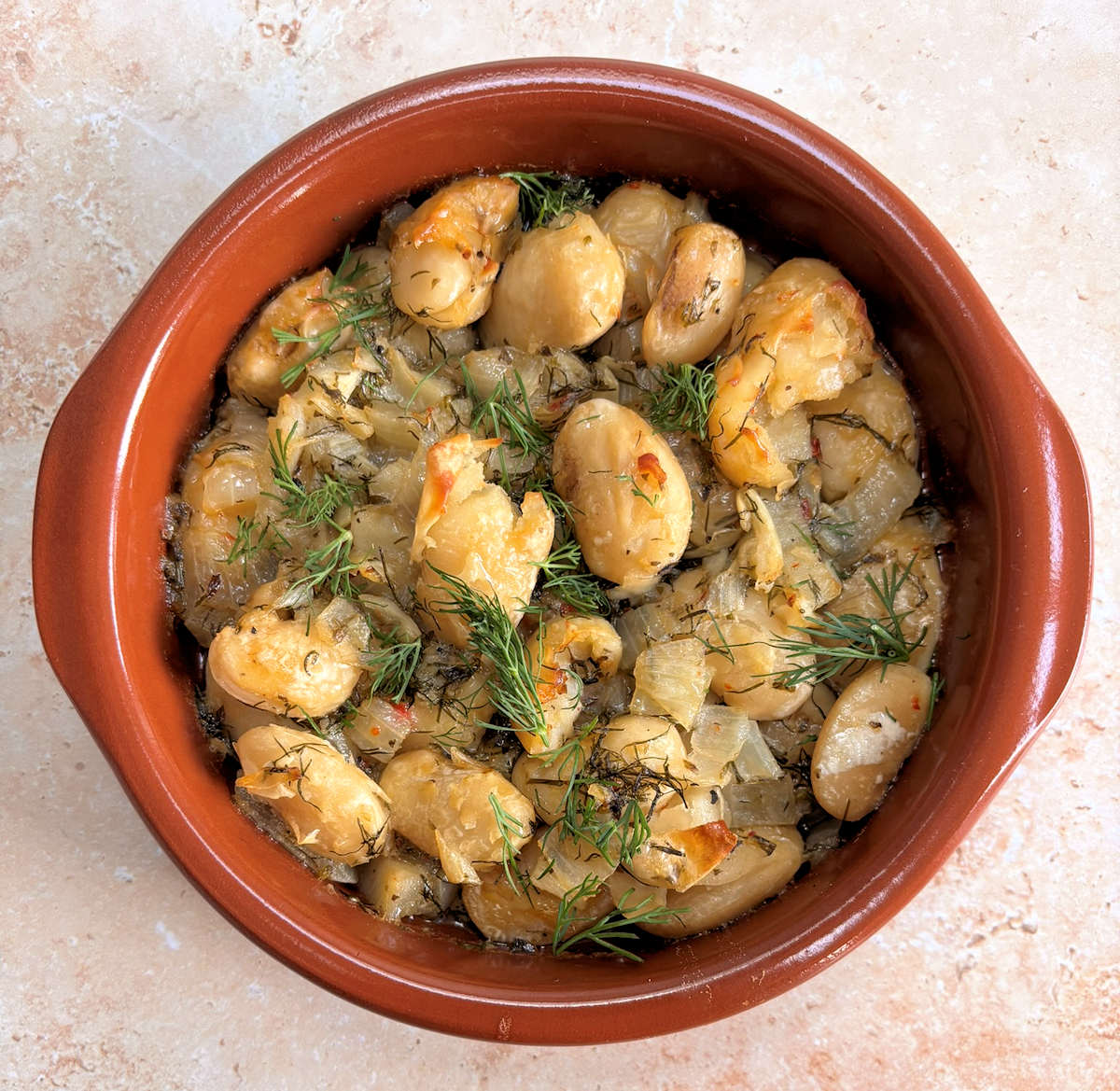
Greek classic meze dish, baked giant beans with garlic, are delicious and easy to make. Not quick though: to make it properly, use dried beans and soak them overnight before cooking.
Gigantic beans
Greek giant beans, fasolia gigantes, are the supersized beans very similar to butter beans aka lima. The gigantic ones though are grown in Greece, mainly in the north west of the mainland, and boast the EU Protected Geographic Indication, like the better known French cheese or wine l'appellation d'origine protégée. Which means if produced elsewhere, they are fake beans.
Seriously though, they are very close in taste and texture (also size) to fat butter beans. Except to produce a truly Greek in spirit a dish, they should be cooked from scratch. Dried overnight then cooked for about an hour, rather than fished out from an overpriced jar, will make an authentic dish of gigantes plaka, baked giant beans.
The way to cook them is threefold: soak, boil, then bake. That method ensures they will eventually emerge completely soft, creamy and buttery, but not mushy or soupy which solely boiling would result in.
Tomato is not the only fruit
Gigantes plaki are the ultimate Greek version of the very familiar British dish (if I dare call it a dish): baked beans. They are not served on toast in Greece but with warm pita; still the similarity is remarkable. And just like Heinz finest, they are usually baked in tomato sauce, though similarities end there and are exceedingly superficial. Soaking, boiling and baking is pronouncedly different to opening a tin and spilling the contents onto toast.
But tomato sauce is not the only possible way to prepare gigantes. Gigantes skordati, beans with garlic and dill, are as delicious and don’t call for those super ripe Greek tomatoes that we can only dream of.
To salt or not to salt?
Traditional approach to beans from scratch says: ‘don’t you dare’. Soak dried beans in plain water, boil them likewise, otherwise they will be tough and never want to soften. Modern cooking schools say it’s nonsense, and that beans will benefit from being seasoned as early as possible.
I have tried both and have to attest that age-old wisdom wins. Salt will lengthen the cooking process as well as make the beans mushier once they finally deign to soften.
Soak them overnight in plenty of clean cold water, not too long though or they will start to break down. Eight to ten hours, or from last thing at night till mid-morning or so will be ample. If you have soaked them but want to cook much later, keep them drained.
Cooking the beans
Similarly to the salt dilemma, there are also conflicting opinions on whether to cook the beans in the water they soaked in, or to refresh it. Apparently refreshing the water cuts down gas-inducing qualities of the beans, but on the other hand nutrients that leached into the water during the soaking are literally going down the drain. But I prefer to refresh it, call me old school if you like.
Boiling takes about forty minutes, not until the beans are completely tender but only just starting to soften. When draining them at this stage, don’t forget to reserve at least a cupful of the cooking liquid – it will be needed for the baking stage.
Baking in garlic and onion sauce
Sweet Greek onions are the best for the sauce but use white or yellow ones if that’s what you have. Finely chopped, they should sweat in olive oil for long enough to completely soften.
If you have a dish that can go on the hob and in the oven, use it for sweating the onions. Otherwise cook the sauce in a frying pan and transfer to an oven casserole.
The parboiled beans will go in there, with all the seasoning and half the dill, plus enough bean cooking liquid to come up to the bean level. You can add more if it cooks off and the beans look too dry.
Baking takes up to two hours, until the beans are very, very soft and the sauce is thickly coating them.
The last ten to fifteen minutes they should be baking uncovered, drizzled with extra olive oil to caramelise the surface. You can also at this stage ladle them into individual dishes (saganaki) and blast under the grill.
They are delicious warm or at room temperature, with warm pita bread on the side.
More bean recipes
Tomato and spinach butter beans, a delicious vegetarian casserole and a satisfying nutritional powerhouse. Plus a supremely frugal budget recipe especially when using dry beans soaked and cooked from scratch.
Butter beans with ham hock, a slow cooked stew of incredible flavours and richness, the ultimate comfort dish. Butter beans need soaking overnight, but what’s difficult about that?
Baked beans with bacon are called b-b-beans in my house. Dried beans soaked overnight, slab bacon, molasses and mustard, five hours cooking – beat that, Mr Heinz!
More Greek recipes
Greek lamb, spinach and feta filo pastry pie, using leftover roast lamb, is better than the original roast. A spanakopita bulked out with shredded roast lamb, this pie can be lunch, dinner, snack or a party dish.
Greek style lamb koftas served with a simple harissa dip. Lamb koftas are perfect for a barbecue and just as tasty griddled. Serve with the harissa dip or classically with tzatziki.
Saganaki is a Greek dish of anything cooked and served in a small skillet, with cheese saganaki the most popular. This recipe for fried saganaki feta with caramelised figs is very simple and makes a super tasty snack or appetiser.